
February 3, 2026
•
5 min read
Top 10 Safest Countries for Expats in 2026
Explore the 10 safest countries for expats in 2026, ranked by crime rates, healthcare quality, and political stability. Practical tips for a secure move abroad.
Justin Barsketis
Insurance Expert
Choosing a new country is one of life's most significant decisions, and for expatriates, personal safety is the bedrock of a successful relocation. Beyond picturesque landscapes and career opportunities lies a fundamental need for security, stable governance, and reliable healthcare. A destination's safety profile directly impacts your daily life, from simple walks in the park to your confidence in emergency services. That's why understanding the real-world safety landscape is so important before you pack a single bag.
This guide moves beyond subjective feelings of safety, offering a data-driven look at the safest countries for expats. We've analyzed key objective metrics to create a definitive list that prioritizes your well-being. Our methodology considers:
- The Global Peace Index: Assessing societal safety, ongoing conflict, and militarization.
- Crime Rates: Examining statistics for both petty and serious offenses.
- Political Stability: Evaluating the risk of civil unrest and governmental integrity.
- Healthcare System Quality: Measuring access, affordability, and outcomes.
Each country profile offers a balanced view, detailing not just the safety statistics but also the practical pros and cons for an expat, essential insurance considerations, and actionable tips for a smooth transition. Whether you're a digital nomad, a relocating family, or a retiree, this resource will help you identify a destination where you can live well and feel confident doing it. Our goal is to give you a clear, practical roadmap for making an informed choice, so your new chapter abroad is built on a foundation of security.
1. Switzerland - Premium Safety & Healthcare Excellence
Renowned for its political neutrality, robust economy, and breathtaking alpine landscapes, Switzerland consistently secures a top spot among the safest countries for expats. Its low crime rates, strong rule of law, and exceptional public infrastructure create a secure and stable environment. Add in a world-class healthcare system, and it's easy to see why it's especially attractive to health-conscious individuals, families, and retirees seeking peace of mind.
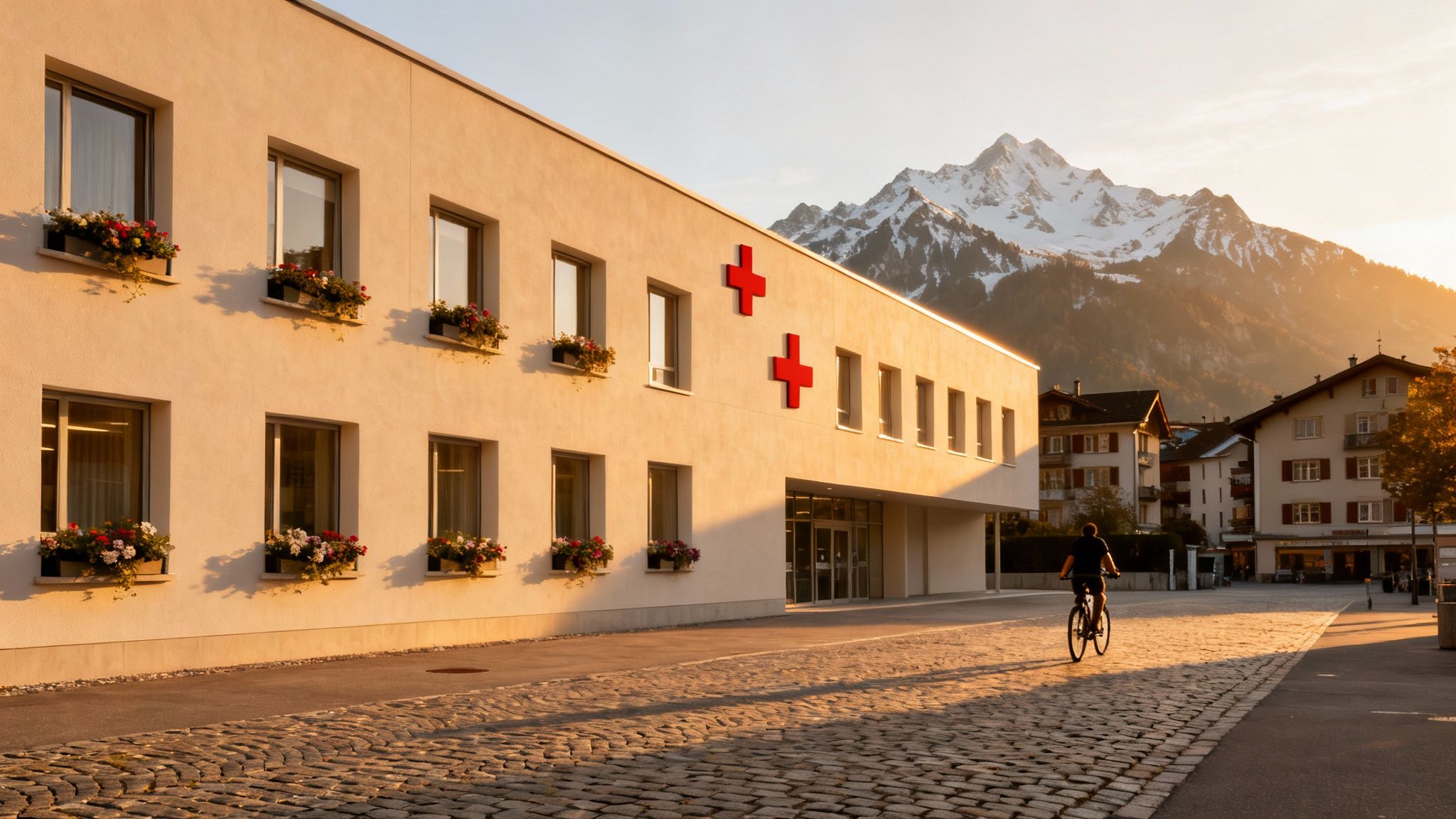
The country's high quality of life is evident in its major cities. Geneva, home to numerous international organizations like the UN and WHO, offers a multicultural and secure setting. Meanwhile, Zurich's thriving financial district and Basel's pharmaceutical hub attract a global workforce, providing ample opportunities for corporate expats.
Key Considerations for Expats in Switzerland
- Employment First: Most non-EU/EFTA expats need a sponsored work visa to relocate. Securing a job offer is a critical first step, so be sure to consult a comprehensive moving abroad checklist to prepare for the process.
- High Cost of Living: Budget carefully, as living expenses in cities like Zurich and Geneva can be 30-50% higher than in comparable major US cities.
- Mandatory Health Insurance: All residents must have basic health insurance. Many expats opt for supplemental private plans to gain access to private clinics and a wider range of treatments.
Actionable Safety & Integration Tips
To ensure a smooth transition, register with your home country's embassy upon arrival for consular support in emergencies. While English is widely spoken in business, learning the local language (German, French, or Italian, depending on the canton) is essential for daily life and deeper cultural integration. This effort significantly enhances both personal safety and employment prospects within one of the world's most secure nations.
2. Singapore - Urban Safety & Efficient Healthcare
The city-state of Singapore is a global benchmark for urban safety, known for its exceptionally low crime rates, strict rule of law, and impeccable public order. This high degree of security, combined with its role as a major international business hub, makes it a top destination for expats. Its efficient, English-speaking environment and top-tier healthcare system provide a smooth transition for professionals, families, and entrepreneurs looking for one of the safest countries for expats in Asia.
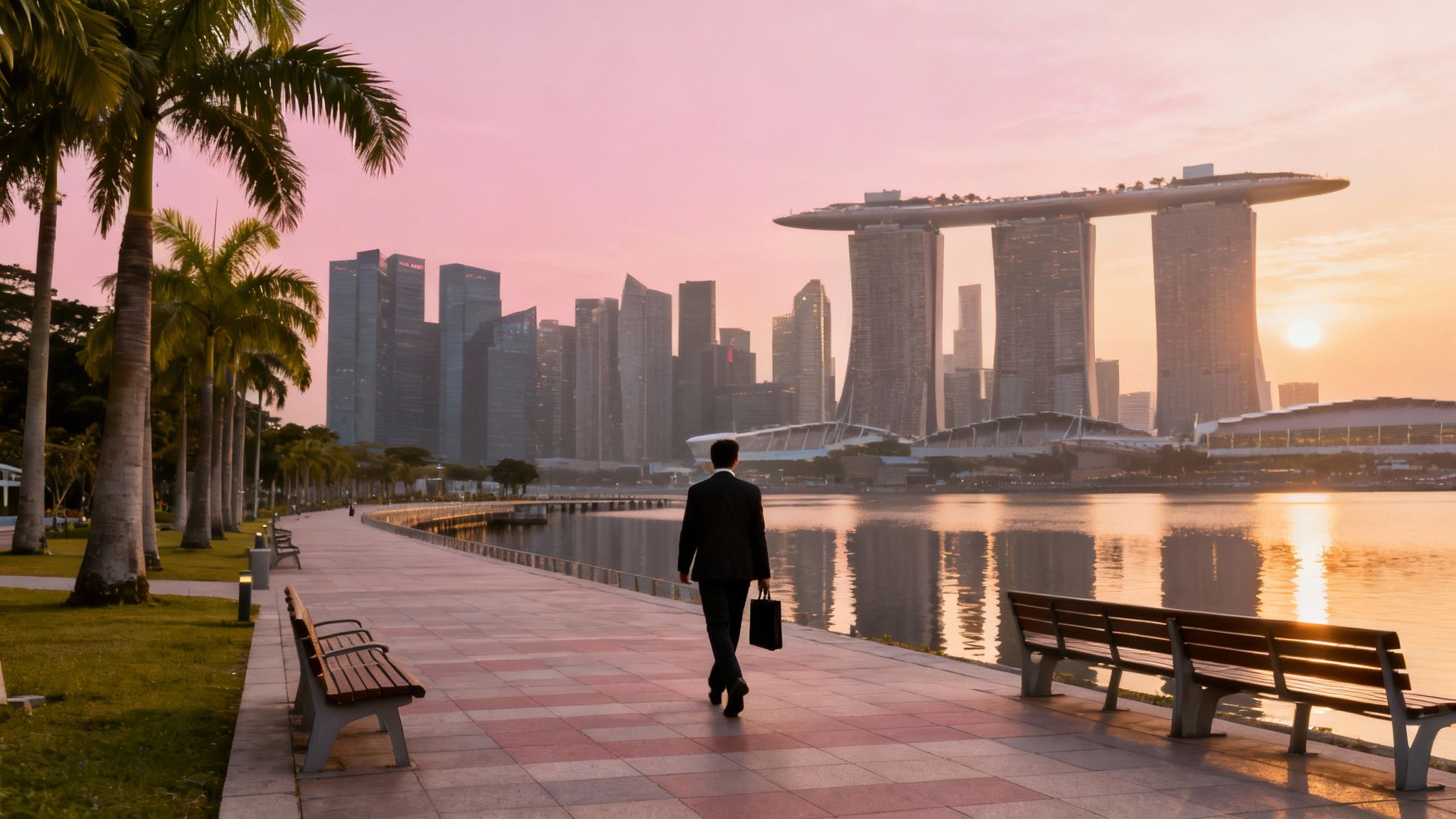
With a large expatriate community, Singapore is built for international living. Major multinational corporations in finance and technology, such as DBS Bank and Sea Limited, actively recruit global talent. Meanwhile, prestigious international schools like the United World College of South East Asia cater specifically to expatriate families, reinforcing the city's welcoming infrastructure.
Key Considerations for Expats in Singapore
- Work Visa is Essential: Relocation for non-residents is almost always tied to employment. Securing a job offer and having your employer sponsor an Employment Pass (EP) is the first and most critical step.
- High Cost of Living: While salaries are competitive, Singapore is one of the world's most expensive cities. Expats should budget accordingly, particularly for housing, which constitutes a major expense.
- Healthcare System: The public healthcare system is excellent, but permanent residents and citizens are prioritized. Most expats rely on employer-provided or private health insurance for access to private hospitals and specialized care.
Actionable Safety & Integration Tips
For a smooth integration, familiarize yourself with local laws, which are strictly enforced and cover everything from jaywalking to public consumption of food on transport. While English is an official language, learning basic phrases in Mandarin or Malay can help build better community connections. Joining established expat organizations like the Singapore Expat Center or the British Association can also provide practical networking and social support, helping you quickly settle in.
3. New Zealand - Natural Beauty & Accessible Safety
Famed for its awe-inspiring landscapes and laid-back culture, New Zealand combines an active outdoor lifestyle with a strong sense of community safety. Its low crime rates, political stability, and high-quality public healthcare system make it a top contender for expats, especially those from English-speaking countries. This unique blend of security and natural beauty makes it one of the best countries to retire to, and it consistently attracts families, remote workers, and retirees.
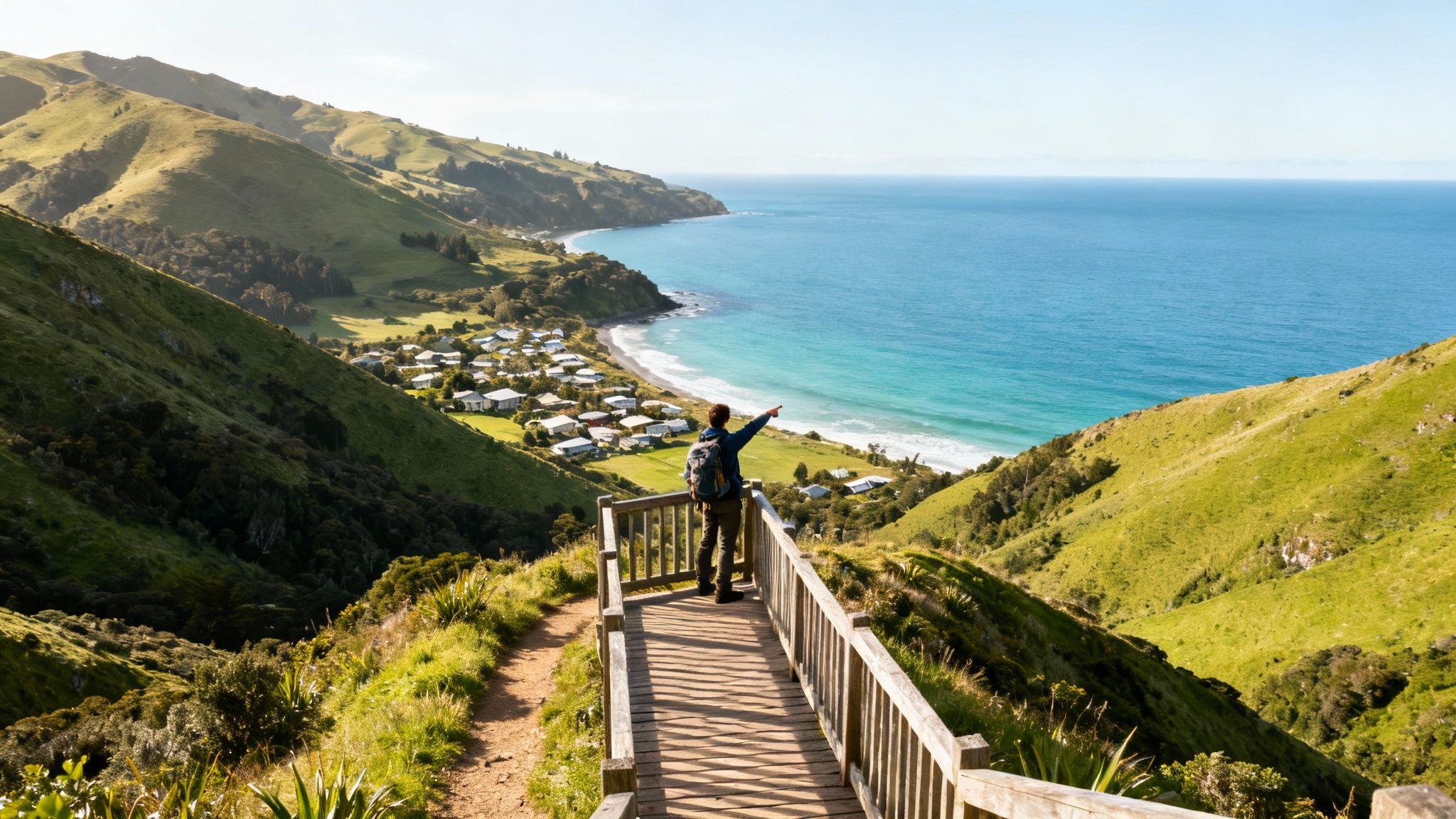
The country's accessibility is a major draw. Cities like Auckland host thriving expat communities with significant UK, Australian, and North American populations, while tech hubs centered around companies like Xero offer sponsored visa opportunities. The renowned film industry has also historically drawn thousands of international professionals, contributing to its cosmopolitan and secure environment.
Key Considerations for Expats in New Zealand
- Visa Planning: Investigate the points-based residency visa system well in advance. The process can take 12-18 months, so early planning is crucial for a successful move.
- Cost of Living: While more affordable than Switzerland, major cities aren't cheap. Budget approximately NZD $2,500-$3,500 per person monthly for comfortable living in Auckland or Wellington.
- Healthcare System: New Zealand has a robust public healthcare system, but wait times for specialist appointments can be long. Many expats secure private health insurance to bypass these delays and gain faster access to care.
Actionable Safety & Integration Tips
To access the healthcare system, register with a local General Practitioner (GP) as soon as you arrive. This is a necessary first step for all non-emergency medical needs. For social integration, proactively join local clubs or community groups related to your hobbies. New Zealand's culture is friendly but can be reserved, and participating in shared activities is the fastest way to build a supportive social network, which is a big part of feeling safe and settled.
4. Canada - Family-Friendly Safety & Universal Healthcare
Known for its welcoming immigration policies, stunning natural landscapes, and inclusive society, Canada is a perennial favorite among the safest countries for expats. The country's low crime rates, political stability, and strong social safety nets create a secure environment ideal for families, professionals, and retirees. Its universal public healthcare system is a major draw, providing essential medical services to all permanent residents and citizens.
Canada's major cities are hubs of diversity and opportunity. Toronto and Vancouver host major tech offices for companies like Google and Microsoft, attracting a global workforce. Montreal offers a vibrant, French-speaking cultural scene, while Alberta's energy sector provides numerous roles for international professionals. The large existing expat communities in these cities help make integration a smoother process.
Key Considerations for Expats in Canada
- Immigration Planning: The Express Entry system is a popular pathway to residency. It's advisable to begin the application process 12-18 months before your planned move to allow for processing times.
- Healthcare Waiting Period: Most provinces have a three-month waiting period before new residents are eligible for public healthcare coverage. Having private insurance to cover this gap is essential.
- Supplemental Insurance: While the public system is robust, many residents use private insurance for services not covered, such as dental care, vision, and prescription drugs. Many US citizens find it helpful to explore overseas health insurance for US citizens to understand their options.
Actionable Safety & Integration Tips
Upon arrival, register for your provincial health card immediately to start the clock on any waiting periods. Connecting with established community and expat groups can provide practical local knowledge and social support. Carefully consider which province to live in, as each has distinct tax rates, healthcare systems, and climates that will significantly impact your experience in one of the world's most welcoming and safe nations.
5. Germany - Stable Healthcare & Social Integration
As Europe's economic powerhouse, Germany combines a robust social safety net, political stability, and a world-class healthcare system, making it one of the safest countries for expats. Its low crime rates and well-organized public services create a secure environment, while its strong economy provides abundant opportunities for professionals and their families. This blend of security and opportunity appeals to a wide range of expats, from tech entrepreneurs to industrial researchers.
Germany's major cities showcase this balance. Berlin's vibrant tech scene attracts a global workforce, while Munich's automotive and engineering sectors (home to BMW and Siemens) host large international communities. Frankfurt, as a financial hub, and the pharmaceutical corridors in Mainz and Leverkusen also draw skilled professionals from around the world, all benefiting from the country's high standards of living and safety.
Key Considerations for Expats in Germany
- Mandatory Registration: Upon arrival, you must register your address at the local registration office (Anmeldeamt or Bürgeramt) within two weeks. This Anmeldung is essential for opening a bank account, getting a tax ID, and other administrative tasks.
- Health Insurance is Compulsory: You cannot reside in Germany without health insurance. Coverage must be in place from your first day. Expats must choose between the public system (GKV) or a private one (PKV), depending on their income and employment status.
- Language is Key: While English is common in business and major cities, proficiency in German is critical for getting through bureaucracy, integrating socially, and maximizing professional opportunities.
Actionable Safety & Integration Tips
To ensure a smooth transition, prioritize securing health insurance immediately upon establishing residency. You can compare the best health insurance plans for expats to find coverage that meets Germany's strict requirements. Learning basic German before you arrive will greatly simplify your initial weeks. Also, join local expat groups and language exchanges (Sprachtandems) to build a social network, which is a vital component of feeling safe and connected in your new home.
6. Denmark - Nordic Safety & Progressive Healthcare
Denmark consistently ranks as one of the safest and happiest nations, offering expats a unique blend of progressive social policies, a strong sense of community, and an exceptional work-life balance. Its foundation of trust, minimal corruption, and low crime rates creates a secure environment perfect for families and professionals. This safety net is supported by a universally acclaimed public healthcare system, ensuring high-quality medical care for all residents.
The country's capital, Copenhagen, is a hub for international talent, attracting professionals to its thriving tech sector (home to companies like Unity) and its world-leading pharmaceutical industry, anchored by giants like Novo Nordisk. The city's design and architecture scenes also draw a significant international workforce, making it a dynamic and secure base for expats.
Key Considerations for Expats in Denmark
- Competitive Job Market: Non-EU expats will need a sponsored job offer to secure a residence permit. The market is competitive, and not speaking Danish can be a barrier in some sectors.
- High Living Costs & Taxes: Be prepared for a high cost of living, with a family needing around DKK 25,000-35,000 per month for comfortable living. High income taxes fund the extensive public services.
- CPR Registration is Key: Upon arrival, immediately register for a Civil Registration Number (CPR). This number is essential for accessing healthcare, opening a bank account, and nearly all aspects of daily life.
Actionable Safety & Integration Tips
To integrate smoothly, enroll in Danish language courses as soon as you arrive; this is crucial for social integration and long-term career prospects. Embrace the local culture by joining community groups, such as employee associations or the ubiquitous cycling clubs. Be mindful of the "winter darkness," as shorter daylight hours can affect mental well-being; many locals use light therapy lamps to counter seasonal affective disorder. This proactive approach to life makes Denmark one of the safest countries for expats seeking both physical and emotional security.
7. Portugal - Affordable Mediterranean Safety & Healthcare Access
Portugal has rapidly become a favorite among expats, blending a relaxed Mediterranean lifestyle with a reassuringly low crime rate and political stability. It offers an appealing combination of affordability, accessible healthcare, and a welcoming culture, making it one of the safest countries for expats, especially for remote workers, retirees, and families seeking a high quality of life without the high costs of other Western European nations. For retirees in particular, we've put together a detailed guide on how to retire in Portugal.
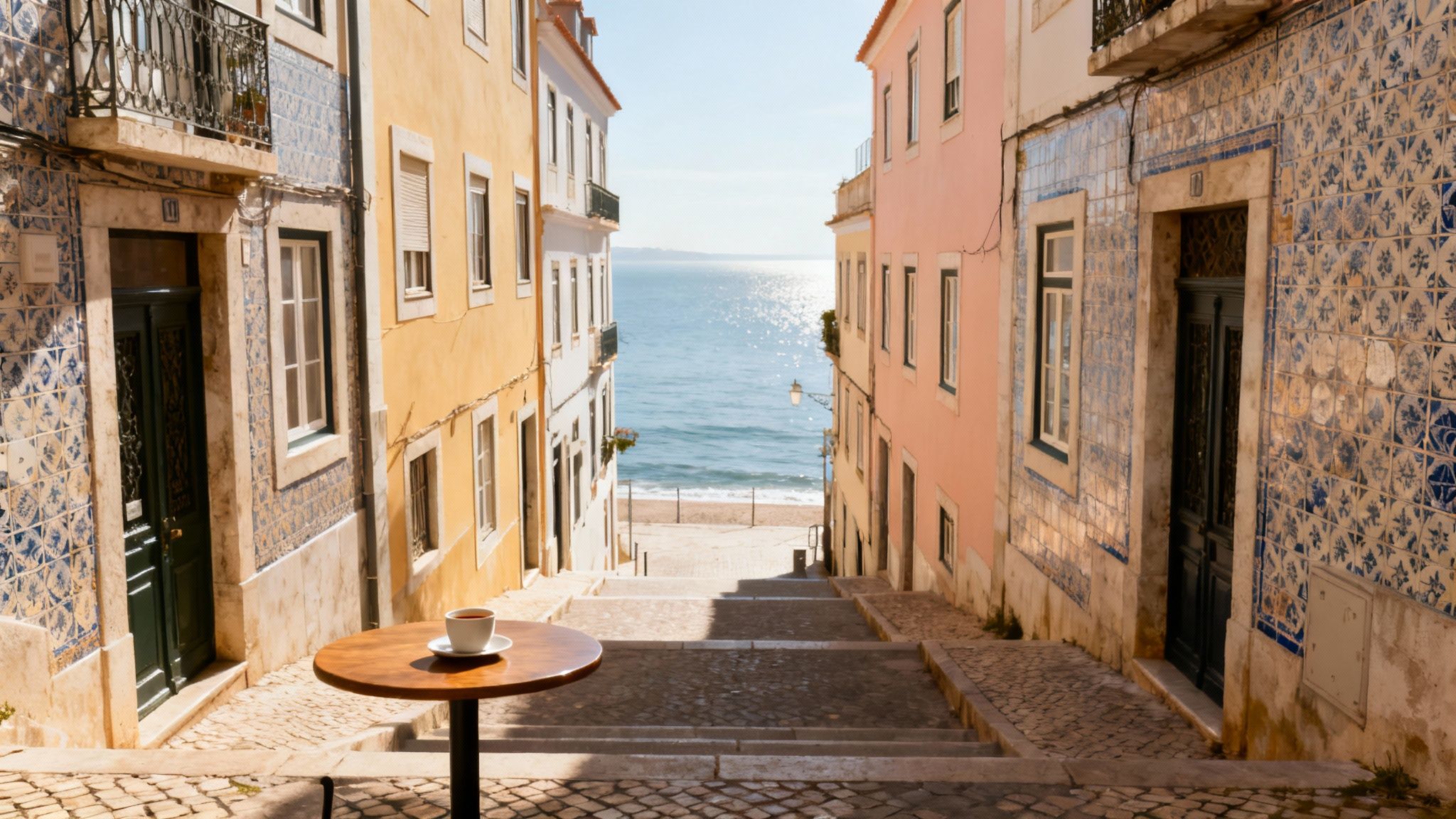
The country's allure is widespread. Lisbon and Porto are vibrant hubs for digital nomads and tech professionals, with a growing number of international companies and co-working spaces. Meanwhile, the sun-drenched Algarve region remains a top choice for retirees drawn by its warm climate, beautiful coastlines, and established expat communities. This diversity creates a secure and dynamic environment for newcomers.
Key Considerations for Expats in Portugal
- Affordable Living: A single person can live comfortably on a monthly budget of €1,200 to €1,800, while families can expect costs around €2,000 to €3,000, significantly lower than in many other safe European countries.
- Tax Incentives: Portugal's original Non-Habitual Resident (NHR) tax regime ended in 2024 and is no longer accepting new applicants. It has been replaced by the IFICI program (sometimes called "NHR 2.0"), which offers a flat 20% income tax rate for ten years but is limited to qualified professionals in specific sectors like scientific research, tech, and innovation. This is a much narrower program than the original NHR, so consult a Portuguese tax advisor to see if you qualify.
- Public Healthcare System: Legal residents gain access to the Serviço Nacional de Saúde (SNS), Portugal's public healthcare system. While generally reliable, many expats choose supplemental private health insurance to bypass potential wait times for specialists.
Actionable Safety & Integration Tips
To integrate smoothly, register with your local parish council (Junta de Freguesia) as soon as you have a permanent address. Learning basic Portuguese is highly recommended; while English is common in tourist areas and among younger generations, speaking the local language is key for daily interactions, getting through bureaucracy, and building genuine connections. Joining local expat groups in Lisbon, Porto, or the Algarve can also provide solid support and networking opportunities.
8. Australia - English-Speaking Safety & Modern Healthcare
Australia offers a compelling blend of a familiar English-speaking environment, a strong rule of law, and a high-quality, modern healthcare system. Its political stability and low crime rates make it one of the safest countries for expats, particularly those seeking a Western lifestyle with an emphasis on outdoor activities. The country's well-developed infrastructure and robust economy create a secure foundation for professionals and families alike.
The nation's major cities are magnets for international talent. Sydney and Melbourne are thriving tech and finance hubs, hosting major offices for global corporations like Google and Microsoft. Meanwhile, the healthcare sector actively seeks international professionals, with visa sponsorship commonly offered to nurses and doctors to address chronic shortages, making it an accessible and safe destination for medical experts.
Key Considerations for Expats in Australia
- Visa Planning is Crucial: Australia uses a points-based system and employer sponsorship for most skilled visas. Begin researching pathways like the Skilled Independent visa (subclass 189) or employer-sponsored visas 18 to 24 months before your intended move.
- Budget for Urban Living: The cost of living is high, comparable to major cities in North America and the UK. A single person should budget around AUD $3,500 monthly, while a family may need over AUD $5,000 for a comfortable lifestyle in Sydney or Melbourne.
- Healthcare System: Residents on many visa types are eligible for Medicare, the public healthcare system. However, many expats secure private health insurance to cover services like dental and optical care and to reduce wait times for specialist appointments.
Actionable Safety & Integration Tips
Upon arrival, register for a Medicare card immediately to ensure access to essential, cost-effective healthcare services. To integrate socially and professionally, join industry-specific associations or regional social groups. While language isn't a barrier, understanding local slang and cultural nuances will significantly smooth your transition and help you build a strong support network in this remarkably safe country.
9. Netherlands - Progressive Safety & Efficient Healthcare
Celebrated for its high living standards, progressive social policies, and efficient public services, the Netherlands offers a secure and welcoming environment for expats. The country's strong economy, excellent infrastructure, and central European location make it a magnet for international professionals. Its low crime rates and politically stable government ensure it remains one of the safest countries for expats seeking a blend of career opportunity and personal well-being.
Major cities like Amsterdam and Rotterdam are hubs for large and diverse expat communities, driven by a booming tech sector (Netflix, Booking.com) and a robust financial industry (ING, ABN AMRO). The high English proficiency throughout the country simplifies the initial transition, allowing newcomers to handle daily life and professional settings with ease while they learn Dutch.
Key Considerations for Expats in the Netherlands
- Employment-Led Relocation: For most non-EU citizens, securing a job offer from a recognized sponsor is a prerequisite for obtaining the necessary work and residence permits.
- Cost of Living: While generally more affordable than Switzerland, major cities like Amsterdam can be expensive. A monthly budget of €2,500-€3,500 is realistic for comfortable living.
- Mandatory Health Insurance: All residents are legally required to take out a basic Dutch health insurance policy (basisverzekering) within four months of arrival. Expats may consider supplemental plans for more extensive coverage.
Actionable Safety & Integration Tips
Upon arrival, you must register with your local municipality (gemeente) within five days to receive your citizen service number (BSN), which is essential for all administrative tasks. While most locals speak excellent English, learning Dutch is highly advantageous for long-term career prospects and deeper social integration. Joining organizations like the Amsterdam Expat Center can provide practical networking opportunities and support for a smooth and safe transition.
10. Ireland - English-Speaking EU Safety & Growing Healthcare Infrastructure
Ireland offers a unique blend of English-speaking familiarity, EU membership benefits, and a reputation for warmth and community. Its stable political environment, low violent crime rates, and strong economic growth make it a secure and attractive destination. This welcoming atmosphere, combined with a rapidly improving healthcare infrastructure, draws tech professionals, young families, and those seeking an accessible entry point into the European Union.
The country's appeal is amplified by its status as a European hub for major US multinationals. Dublin's thriving tech scene, with giants like Google, Apple, and Microsoft, employs thousands of expats. Similarly, the pharmaceutical sector in Cork and Limerick and the international finance industry attract a diverse, global workforce, creating vibrant expat communities from the US, UK, and Australia.
Key Considerations for Expats in Ireland
- Employment is Key: For most non-EU citizens, securing a job with a company that can sponsor a Critical Skills Employment Permit is the primary path to relocation. Visa policies are becoming more restrictive, so a job offer is essential.
- High Cost of Living: Be prepared for significant expenses, especially in Dublin. Budget approximately EUR 2,500-3,500 monthly for a comfortable family lifestyle, noting that housing is the largest cost.
- Competitive Housing Market: The demand for rental properties far outstrips supply in major cities. Start your housing search well before you arrive and have your finances and references in order.
Actionable Safety & Integration Tips
To access the healthcare system, register with a General Practitioner (GP) as soon as you have a permanent address. While the public system is robust, many expats choose private health insurance to bypass long wait times for specialist appointments. For social and professional integration, joining groups like InterNations or professional associations in your field can provide a strong support network and help you feel at home in one of Europe's safest countries for expats.
Top 10 Expat Destinations: Safety & Healthcare Comparison
| Country | Implementation complexity | Resource requirements | Expected outcomes | Ideal use cases | Key advantages |
|---|---|---|---|---|---|
| Switzerland | High - strict visas, often require job offer or funds; regional language needs | Very high cost of living; high taxes; private insurance often needed | Exceptional safety; world-leading healthcare with fast specialist access | Retirees, health-conscious expats, finance professionals seeking stability | Top-tier medical care, very low crime, excellent infrastructure |
| Singapore | Moderate - employer sponsorship common; salary thresholds for visas | Very high cost of living; efficient public services; private insurance recommended | Ultra-low crime; fast, technologically advanced healthcare with short waits | Corporate expats, families, finance and tech professionals | English accessibility, rapid bureaucracy, excellent hospitals |
| New Zealand | Moderate - points-based visas; plan 12-18 months ahead | Moderate cost (varies by city); geographic isolation; public healthcare waitlists | Very safe; strong public care for residents albeit with wait times; high quality of life | Families, retirees, remote workers seeking outdoors lifestyle | Natural environment, welcoming residency pathways, work-life balance |
| Canada | Moderate - Express Entry/provincial streams; clear PR pathways | Moderate-high cost in major cities; universal healthcare with wait times; higher taxes | Very safe; universal basic healthcare; robust social services | Families, skilled professionals, those seeking permanent residency | Clear immigration routes, multicultural society, proximity to US |
| Germany | Moderate - efficient but document-heavy bureaucracy; German often required | Moderate cost of living; mandatory public/private insurance | Stable safety; comprehensive mandatory healthcare; strong job market | Professionals, families aiming for EU residency and stable careers | Mandatory coverage, lower living cost vs some peers, strong economy |
| Denmark | Moderate-high - competitive market; Danish language advantageous | Very high taxes and cost of living | Extremely safe; comprehensive public healthcare and strong preventive care | Professionals prioritizing work-life balance and family benefits | Progressive social policies, excellent work-life balance, preventive health focus |
| Portugal | Low-moderate - digital nomad visas accessible; bureaucracy slower | Low-moderate cost of living; public healthcare affordable but with waitlists | Safe with low violent crime; good public healthcare with specialist delays | Retirees, digital nomads, remote workers seeking Mediterranean lifestyle | Affordability, pleasant climate |
| Australia | Moderate-high - points or employer sponsorship competitive; credential checks | High cost of living; Medicare covers basics but gaps (dental/vision) | Very safe; high-quality healthcare with some coverage gaps and demand pressure | English-speaking professionals, families seeking outdoor lifestyle | Medicare universal cover, English environment, strong job market |
| Netherlands | Moderate - employer-sponsored visas common; mandatory health insurance | High cost of living; administrative insurance requirements | Very safe; efficient mandatory insurance system with good access | Expats in tech/finance; those wanting central EU location | Strategic location, excellent cycling infrastructure, high English proficiency |
| Ireland | Moderate - visa sponsorship common but housing and permits can be challenging | High cost of living (esp. Dublin); stretched public healthcare with long waits | Safe with low violent crime; improving healthcare but long specialist waitlists | Tech and pharma professionals, families seeking English-speaking EU base | English + EU access, strong multinational job market |
Making Your Move: How to Secure Your Health and Safety Abroad
Moving abroad is one of the most exciting things you can do, and choosing a destination from this list of the safest countries for expats sets a strong foundation for your new life. But true security goes beyond low crime rates and political stability. It includes comprehensive well-being, with healthcare at the core.
Throughout this guide, we've explored how top-tier safety is often linked to robust social infrastructure. Countries like Canada, Germany, and Denmark offer exceptional public healthcare, yet as we've seen, these systems aren't without their complexities for newcomers. Mandatory waiting periods, enrollment hurdles, and coverage gaps for things like dental, vision, and mental health are common issues that can leave even the most prepared expat in a tough spot.
Bridging the Gap: From Public Systems to Personal Security
The key takeaway is that relying solely on a host country's public healthcare system from day one is often impractical and risky. Each nation, from Portugal to Australia, presents unique challenges that can delay access to essential medical care. This is exactly why getting proactive about your health coverage isn't just a good idea, it's a necessity for a smooth transition.
Key Insight: The world's safest countries provide an excellent baseline for security, but personal peace of mind comes from taking charge of your own health and financial well-being. A private health plan acts as your personal safety net, ensuring you have control over your medical care, regardless of local system limitations.
Thinking strategically about your healthcare is the final, crucial step in your relocation plan. When you're making your move and prioritizing peace of mind, a critical step is researching and obtaining robust international health insurance. This kind of specialized coverage is designed to fill the specific gaps that expats face.
Actionable Steps for a Secure Transition
Your journey to becoming a well-prepared expat doesn't end with choosing a destination. Here are your next steps:
- Assess Your Needs: Review your personal and family health requirements. Do you need coverage for pre-existing conditions? Are you planning to start a family? Do you require comprehensive mental health support? Answering these questions will define your insurance needs. For more details, check out our guide to countries with the best healthcare for expats.
- Understand Local Requirements: Revisit the country profiles for your top choices. Note the specific waiting periods for public healthcare enrollment and any mandatory insurance requirements for your visa type. This information will dictate the kind of private coverage you need and for how long.
- Seek Expert Guidance: The global insurance market is complex. Instead of going it alone, consult with a specialized brokerage that understands the expatriate landscape. An expert can compare plans from dozens of providers to find one that aligns with both your destination's rules and your personal budget.
- Secure Coverage Pre-Departure: The most effective strategy is to have your international health plan in place before you land. This ensures you are covered from the moment you arrive, eliminating stress and protecting you from unexpected medical costs during the critical initial phase of your move.
By taking these steps, you turn the abstract concept of "safety" into something real and actionable. You're not just moving to one of the safest countries for expats; you're actively building a secure, resilient life abroad, backed by the confidence that your health and well-being are fully protected.
Ready to find the perfect health plan for your move? The specialists at Expat Insurance work with over 65 insurers to provide personalized, no-obligation quotes tailored to your unique expatriate journey. Visit Expat Insurance to compare your options and ensure you have comprehensive medical protection from day one.
Justin Barsketis
Insurance Expert & Writer
Justin is an insurance guru that loves digital marketing. As our founder Justin manages our business development programs and MGA network. Please don’t hesitate to contact him if you are not getting the attention you deserve.
