

January 30, 2026
•
5 min read
A Parent's Guide to Raising Third Culture Kids
Discover the unique world of third culture kids. This guide helps expat families navigate the challenges and celebrate the strengths of a global upbringing.
Justin Barsketis
Insurance Expert

For parents working in international business, diplomacy, or the military, raising children abroad is a unique journey. These children, often called third culture kids or TCKs, grow up in a world that isn't quite their parents' home country, nor is it entirely the country they're living in. They build an identity that's a rich blend of both.
Understanding the World of Third Culture Kids
Think of it this way: your child carries a kind of "cultural backpack." Inside isn't just stuff from their passport country (the first culture) or from where you're currently living (the second culture). Instead, it's filled with a mix of languages, customs, and experiences from everywhere they've been. This blend creates something entirely new—a distinct, shared space known as the "third culture." This is the reality for a TCK.
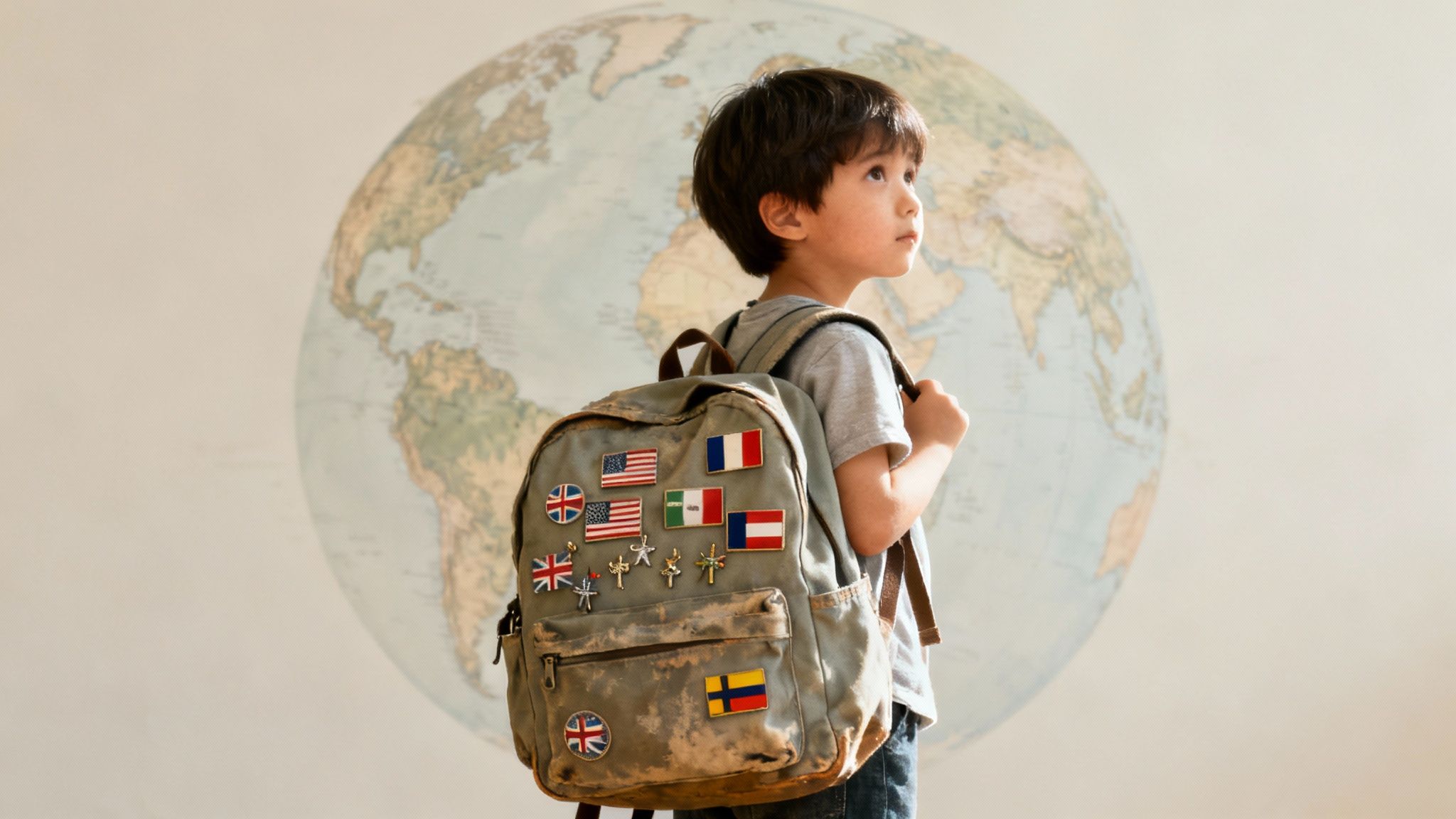
Sociologists first coined the term to describe this growing group of kids whose sense of self isn't tied to one single place. Their lives are often defined by mobility, with parents working in fields like:
- International business
- Diplomacy and government
- Non-profit or missionary work
- The military
This constant movement isn't just about logistics; it fundamentally shapes who they become. They often attend international schools, forging deep connections with other kids who get what it's like to live between worlds. For parents, getting a handle on the different educational models is key. You can learn more in our guide on international school curriculums.
The Roots of the TCK Identity
At its heart, the TCK experience is about belonging to a community defined by relationships, not geography. "Home" isn't a city or a country; it's the shared life of the global expat world. This creates a unique worldview, but it also comes with its own set of challenges and advantages, which we'll dive into later.
A TCK builds relationships to all of the cultures, while not having full ownership in any. Although elements from each culture are assimilated into the TCK's life experience, the sense of belonging is in relationship to others of similar background.
To give you a better feel for what shapes a TCK, here's a quick look at their defining traits.
Key Characteristics of a Third Culture Kid
This table breaks down some of the core experiences that shape the TCK identity.
| Characteristic | Description | Common Experience |
|---|---|---|
| Global Perspective | An innate understanding that there are multiple ways of viewing the world. | Effortlessly switching between cultural contexts and seeing issues from different sides. |
| High Mobility | Frequent relocation between different countries and cultures. | Attending multiple schools and saying goodbye to friends on a regular basis. |
| Cultural Hybridity | A personal identity that blends elements from their home culture and host cultures. | Feeling like an insider and outsider simultaneously in multiple cultures. |
| Rootlessness | A struggle to answer the question, "Where are you from?" | Feeling most at home with other TCKs who share a similar background. |
| Adaptability | A high degree of flexibility and the ability to adjust to new environments quickly. | Being able to quickly learn social cues, customs, and basic phrases in a new country. |
These characteristics create a unique profile—one that is becoming more and more common in our interconnected world.
The TCK phenomenon isn't new, but it's growing at an incredible pace. In 2020, the UN reported 281 million international migrants globally, with 36 million being children—a significant number of whom are growing up as third culture kids. This expanding demographic makes it more important than ever for parents, educators, and even employers to understand their unique point of view. For more on this trend, check out a great resource like ExpatChild.com.
Now that we have a foundation, we can explore the profound opportunities and the very real complexities that come with raising a child between worlds.
The Hidden Superpowers of a Global Upbringing
What if a childhood spent crossing borders wasn't just a series of moves, but a training ground for some pretty remarkable abilities? The challenges are real, no doubt, but raising third culture kids often cultivates a unique set of "superpowers." These are the strengths that bubble up from a life lived between worlds, turning constant change into a powerful advantage.
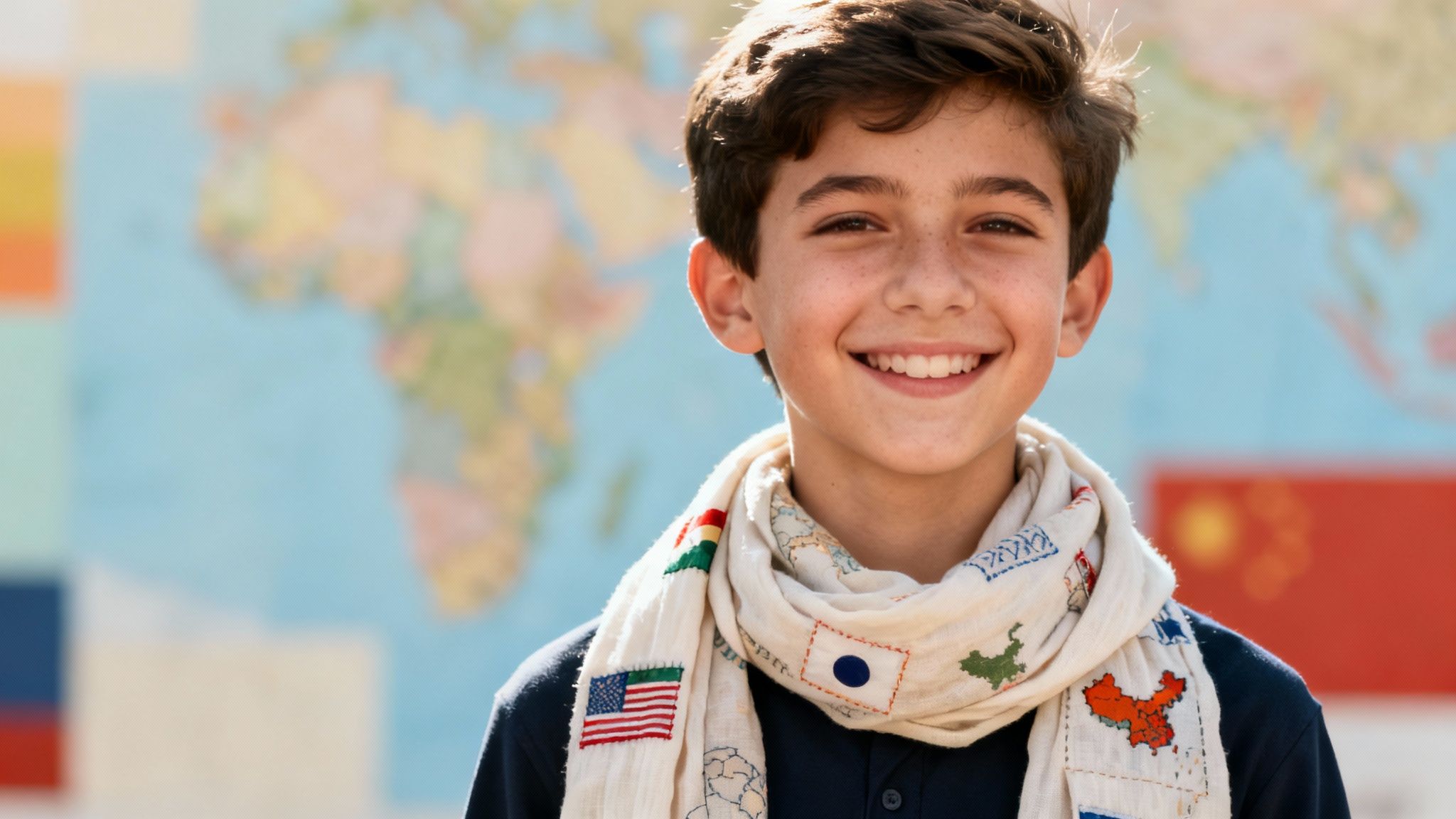
Think of a TCK as a cultural chameleon. They develop an almost sixth sense for observing, adapting, and blending into all sorts of social environments. This isn't about them losing their identity; it's about expanding it. They just get good at reading subtle social cues, figuring out different communication styles, and navigating unfamiliar customs with a grace many adults struggle to find.
This exceptional adaptability is forged in the fire of constant transition. Every new school, new neighborhood, and new country becomes a lesson in resilience and flexibility. That lived experience translates directly into a more open and expanded worldview, where "different" isn't scary—it's just normal.
The Career Edge of a Global Mindset
These so-called superpowers aren't just for social situations. They give adult TCKs a serious edge in the professional world. In an economy that's more connected than ever, employers are actively looking for the very skills TCKs pick up naturally.
Their built-in strengths often include:
- Cross-Cultural Communication: They're naturals at bridging communication gaps between people from different backgrounds, making collaboration and understanding a whole lot easier.
- Problem-Solving Agility: Since they're used to figuring things out in new situations, they tackle challenges with creativity and an open mind, unfazed by unexpected curveballs.
- High-Level Adaptability: A new project, a different team, a complete change in strategy? Adult TCKs can pivot quickly and effectively. No big deal.
- Innate Global Perspective: They understand international markets and diverse consumer behaviors on a deep, personal level—not just from a textbook.
This mix of skills makes them prime candidates for leadership roles in international business, diplomacy, and any innovative field that demands a global outlook.
Fueling Academic and Professional Success
The benefits aren't just anecdotal, either. The data actually backs it up. Research consistently shows that third culture kids often excel in school and are highly motivated to pursue higher education and international careers.
This upbringing equips them with a profound sense of cultural adaptability and adjustment that often surpasses that of their mono-cultural peers, despite the emotional complexities of a mobile life.
This drive has a real impact on their futures. Studies have found that adult TCKs are four times more likely to earn a Bachelor's degree than the general population. On top of that, 40% go on to pursue postgraduate study, often funneling that education into high-mobility professions.
The career path data shows some fascinating trends, too. For instance, fully one quarter of TCKs work in education as teachers, professors, or administrators, with significant numbers also entering health and social services. You can dig into more of these TCK research findings on the University of Edinburgh's blog. These stats offer a reassuring glimpse into the long-term rewards of raising a globally-minded kid.
Ultimately, the challenges of a TCK upbringing are woven together with incredible opportunities. By understanding these inherent strengths, parents can feel more confident that they are equipping their children with the resilience, intelligence, and perspective needed to thrive in our complex world.
Navigating the Emotional Landscape of a Mobile Life
The globally mobile life, for all its cultural discovery, brings its own unique set of emotional hurdles. For third culture kids, this journey is about more than just getting used to new foods or languages. It's a deep, ongoing process of figuring out who they are in the middle of constant change. This is the heart of the TCK's emotional world—a place of real complexity and quiet challenges.

Many TCKs use the analogy of having "roots in the air" to describe their identity. Unlike a tree planted firmly in one spot, their roots are spread across continents. They draw nourishment from many cultures but never feel fully anchored in just one.
This creates a powerful paradox: feeling at home everywhere and nowhere, all at once. It's not just a personality quirk; it's fundamental to how they see themselves. The constant cycle of arrival and departure can make it tough to form the deep, lasting friendships that ground most childhoods.
The Weight of Unresolved Grief
One of the heaviest, yet least discussed, challenges for third culture kids is unresolved grief. Every move means a flood of goodbyes—to friends, teachers, homes, and even to the version of themselves they were in that place. Because another adventure is always just around the corner, this grief often gets pushed aside, never fully acknowledged or processed.
This pattern of unaddressed loss can build up over the years, creating what some experts call a "grief tower." Without a healthy way to deal with it, these feelings don't just vanish. They can show up later in life as a fear of attachment, trouble with emotional vulnerability, or a deep sense of loneliness.
The impact on relationships is huge. TCKs might get very good at making friends quickly, but they often stay hesitant to form deep bonds. It's a subconscious way to shield themselves from the inevitable pain of the next goodbye. For Third Culture Kids, a mobile life often means navigating numerous emotional shifts and requires a deep understanding of how best to approach supporting children through transitions.
This cycle of mobility is a defining feature for millions of families. According to Finaccord estimates, approximately 87 million expatriates were living abroad in 2021, with roughly half of them relocating with partners and children. This global trend shows that factors like how often a family moves can shape a child's adjustment, sometimes even more than the specific locations. While studies show varied mental health outcomes, unresolved transitions are a key risk factor for feeling isolated.
The Search for a Stable Self
The constant flux of a TCK's world can make it hard to develop a stable sense of self. When your surroundings, social circles, and cultural rules are always shifting, what's the one thing that stays the same? For many, the family unit becomes that anchor—the primary source of identity and stability.
This, however, can bring its own pressure. The simple question, "Where are you from?" becomes incredibly loaded. Instead of a one-word answer, it can trigger a complex internal monologue. This often leads to:
- Identity Confusion: Feeling like a cultural chameleon, able to blend in anywhere but not truly belonging to any single group.
- A Sense of Otherness: Feeling like an outsider in both their passport country and their host countries, never quite fitting in completely.
- Restlessness: As adults, many TCKs report a nagging restlessness or an "itch" to move again. Stability can feel unfamiliar, even uncomfortable.
These emotional complexities aren't signs of a flawed upbringing. They are the natural result of a life lived across borders. Even the seemingly simple act of returning "home" can be one of the hardest parts of the journey. You can learn more about the unique struggles they face in our article on repatriation challenges.
Understanding these undercurrents is the crucial first step for parents and educators. It allows them to provide the validation and support TCKs need to build a strong, integrated identity from their wonderfully diverse experiences.
Actionable Strategies for Supporting Your TCK
Knowing the emotional world of a third culture kid is one thing, but knowing how to be their anchor in it is something else entirely. As a parent, you are the most consistent presence in your child's incredibly mobile life. Think of this as your playbook, filled with real, tangible strategies to empower your TCK and help them turn the challenges of a global life into a solid foundation of resilience.
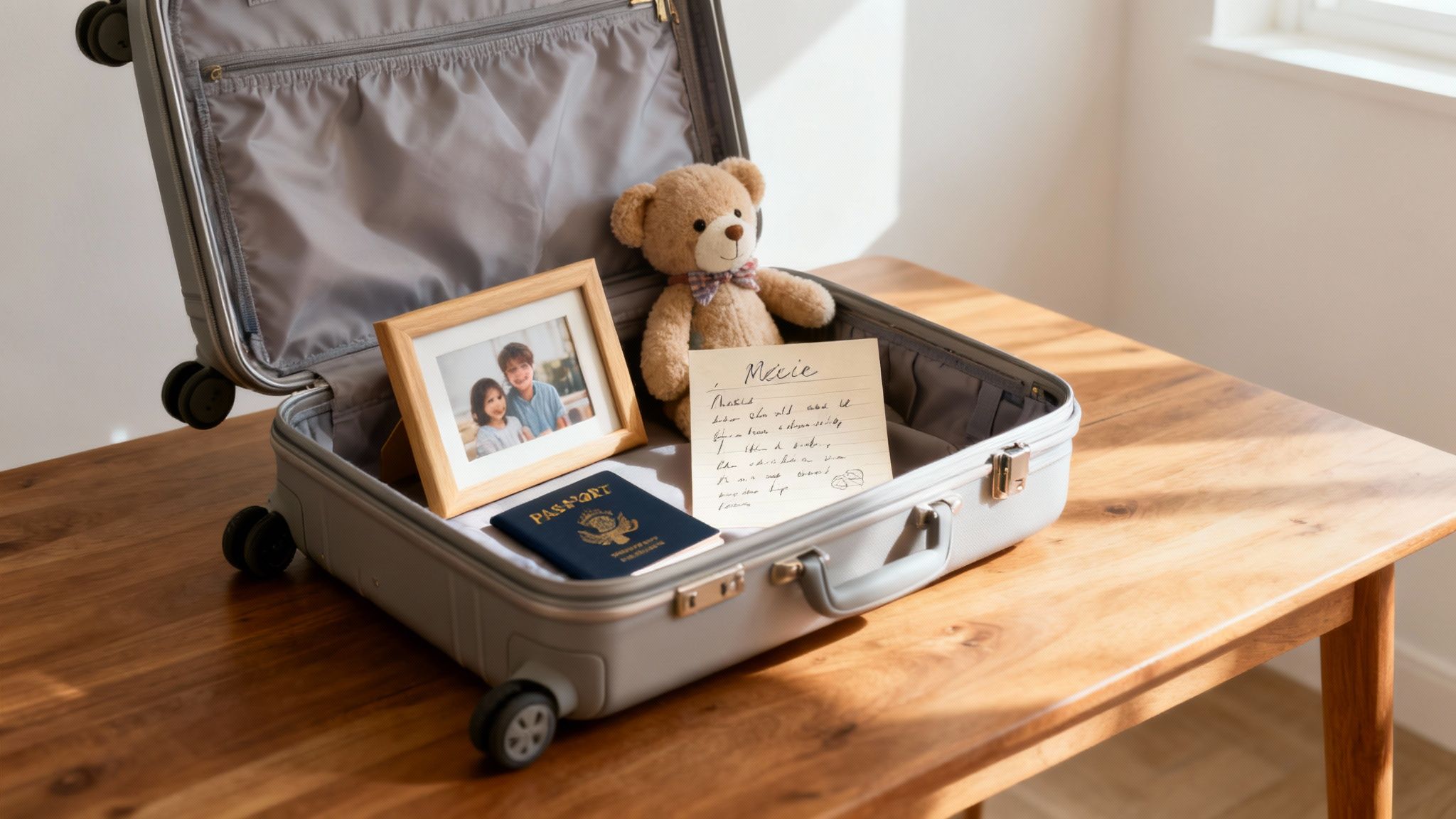
The goal isn't to build stability based on a physical place. It's about building it through consistent family rituals and genuine emotional support. These strategies are designed to create a secure home base your child can carry with them, no matter where they are in the world.
Create Portable Anchors of Stability
When "home" is a revolving door of addresses, stability has to come from inside the family itself. I like to call these family routines and traditions "portable anchors"—rituals you can pack in a suitcase and deploy anywhere to create an instant sense of belonging.
These don't need to be complicated. In fact, the simplest, most consistent practices are usually the most effective.
- Weekly Traditions: Lock in some non-negotiable family time. Maybe it's Friday pizza and movie night or Sunday morning pancakes. These rituals create a rhythm that geography can't disrupt.
- Celebrating Heritage: Go all-in on celebrating holidays and traditions from your passport country. This is a powerful way to keep your child tethered to their cultural roots, giving them a consistent thread in their identity.
- Physical Reminders: Always pack the things that make a house feel like your home—that one specific blanket, the photo frames that always go on the mantle, a well-loved stack of books. These objects are tangible links to your family's story.
Of course, the logistics of moving are a huge source of stress. Getting a handle on the practical side of things, like choosing an international removal company, can free up a lot of mental energy. This kind of planning brings a sense of order to the chaos and lets you focus on the emotional transition.
To make this easier, we've put together a simple action plan for parents navigating an international move.
Parent's Action Plan for Relocation Success
| Phase of Relocation | Key Action | Why It Matters |
|---|---|---|
| Before the Move | Involve your child in the planning process. Let them help pack their own "essentials" box with familiar items. | This gives them a sense of control and ownership over the change, reducing feelings of powerlessness. |
| Before the Move | Research and connect with schools, communities, and TCK groups in the new location ahead of time. | Familiarity breeds comfort. Showing them pictures and talking about future friends makes the unknown less scary. |
| During the Move | Prioritize re-establishing your "portable anchors" (like movie night) as quickly as possible, even in a temporary home. | This sends a clear signal that the family unit is stable, even when the surroundings are new and chaotic. |
| During the Move | Maintain a positive but realistic attitude. Acknowledge that moving is hard and it's okay to feel sad. | Your child will take cues from you. Validating their feelings builds trust and emotional honesty. |
| After the Move | Establish a robust continuity of care plan, especially for healthcare and mental health support. | Prevents gaps in essential services and ensures your child has professional support for their adjustment. |
| After the Move | Encourage maintaining connections with old friends via video calls, but also actively help them build new ones. | Balances the need for old roots with the necessity of planting new ones, preventing isolation. |
This checklist isn't about perfection; it's about providing a consistent, supportive framework during a time of massive upheaval.
Validate Their Unique Reality
A TCK's heart can be a complicated place. They might be genuinely excited for a new adventure while simultaneously grieving the life they're leaving behind. Your most important job is to make room for all of it, without judgment.
For a third culture kid, the question "Where are you from?" can be a source of anxiety. Instead of a simple answer, it requires a story. Helping your child craft and own that story is a powerful gift.
Resist the urge to dismiss their sadness with a quick, "Don't worry, you'll make new friends!" Instead, sit with them in their grief. Acknowledge what they're losing. One survey of TCKs found that 52% frequently experienced friends or family moving away, which creates a deep-seated sense of instability. Recognizing this reality is fundamental to their emotional well-being.
Build a Bridge for Connections and Care
A life in motion requires a proactive plan for maintaining connections. This isn't just about friends and family back "home," but also about ensuring consistent access to physical and mental healthcare.
Here's a quick checklist to keep those lifelines strong:
- Prioritize Communication: Make video calls with grandparents, cousins, and old friends a scheduled part of your week. Help your child nurture these bonds so they feel part of a community that stretches beyond their current city.
- Plan Visits: Whenever possible, plan trips back to your passport country or invite friends and family to visit you. These physical reunions make distant relationships feel real and tangible.
- Ensure Continuity of Care: This one is non-negotiable. A solid international health insurance plan is your safety net. It guarantees access to quality medical and mental health services anywhere you land, preventing dangerous gaps in care.
By putting these strategies into practice, you're not just managing a move. You're teaching your child that home isn't just a dot on a map—it's the love, stability, and understanding they carry inside them, wherever they go.
Why Global Health Insurance Is Non-Negotiable
For any family living abroad, healthcare is more than just a logistical line item; it's the bedrock of stability in a life that's always in motion. For third culture kids, this stability is absolutely crucial. Their physical and mental well-being depends on having a consistent, reliable safety net, no matter which country they're calling home this year.
This is where specialized planning isn't just a good idea—it's essential. Standard travel insurance or the local plan you pick up in your new country simply aren't built for the realities of the expat lifestyle. They're often riddled with geographical restrictions, short-term limits, and critical gaps in coverage that can leave your family dangerously exposed.
The Pitfalls of Inadequate Coverage
Trying to rely on patchwork solutions or assuming a new local plan will be enough in each country is a high-stakes gamble. The healthcare landscape changes dramatically from one nation to the next, and the last thing any parent wants is to navigate an unfamiliar medical system during a crisis.
This is especially true when you consider the unique health needs of third culture kids. The challenges they face are often overlooked by standard policies:
- Interrupted Care: Frequent moves can throw a wrench in everything from routine vaccination schedules to ongoing care for chronic conditions like asthma or allergies.
- Mental Health Gaps: Finding a therapist who truly understands the TCK experience—the grief, the rootlessness, the identity confusion—is tough enough. Finding one covered by a local insurance plan can feel next to impossible.
- Administrative Hurdles: Every new country means a mountain of new paperwork, different provider networks, and a whole new set of rules. It creates a constant state of administrative stress for parents.
These aren't just minor inconveniences. They can lead to significant delays in getting care and add immense pressure to what is already a challenging transition for a child.
For a TCK, stability isn't just about familiar routines; it's about knowing there is a consistent system of support they can count on. A robust global health plan provides that continuity, ensuring their well-being is a constant, not a variable tied to their current location.
Beyond Emergencies: Continuity of Care
This is exactly why a comprehensive international health insurance plan is non-negotiable. It's designed from the ground up for the realities of an expatriate life, providing a seamless shield of protection that moves right along with your family. Unlike temporary travel policies, these plans offer long-term, comprehensive coverage that you can rely on.
A proper global plan addresses the core needs of a TCK family head-on. The key benefits usually include:
- A Global Network: You get access to a trusted, pre-vetted network of doctors, specialists, and hospitals all over the world. This completely eliminates the guesswork of trying to find quality care in a new country.
- Coverage for Pre-existing Conditions: This is a huge one. Local plans often exclude pre-existing conditions, but a good global plan ensures continuous management for any ongoing health issues without a break in coverage.
- Mental Health Support: Many plans now include solid mental health benefits and even telehealth options, making it far easier to connect with culturally-aware professionals who just "get" the TCK experience.
- Emergency Evacuation: This provides incredible peace of mind. You know that if a serious medical event happens in a place with subpar facilities, your child can be transported to a center of excellence for treatment.
This level of integrated care is fundamental. It shifts the family's focus from reactive problem-solving during a crisis to proactive wellness management. You can explore more about how these plans are structured in our guide on health insurance for expats.
Ultimately, investing in the right health insurance is an investment in your child's resilience. It removes a massive source of uncertainty from your life, freeing you up to focus on the emotional and developmental support your TCK needs to thrive. It guarantees that no matter how many borders you cross, your family's health is protected by a plan that actually understands your world.
How TCKs Are Shaping the Future of Work
That one-of-a-kind third culture kid upbringing doesn't just build character—it forges a professional toolkit that's practically tailor-made for today's global economy. What might feel like a complicated childhood of constant packing and unpacking actually translates into a set of skills companies are desperate for. More and more, businesses are realizing that Adult Third Culture Kids (ATCKs) aren't just employees; they're natural-born global connectors.
Their entire life has been a masterclass in cultural nuance, something you just can't learn in a corporate seminar. An ATCK can step into a tense multinational meeting and almost instinctively read the room, tweaking their own communication style on the fly to bridge the gaps between colleagues from wildly different backgrounds. This innate cultural intelligence is a massive competitive advantage.
The ATCK Professional Advantage
In a world where business is increasingly borderless, the traits baked into the TCK experience have become non-negotiable for success. That background gives them a deep well of resilience, adaptability, and an effortless global mindset that makes them prime candidates for leadership and innovation.
It's no surprise that organizations are actively hunting for people with these abilities. They're looking for individuals who can:
- Lead Diverse Teams: ATCKs just get it. They're masters at creating inclusive spaces because they understand firsthand that there are a dozen valid ways to solve the same problem.
- Drive Global Business: Their personal, lived-in knowledge of different markets and consumer habits offers priceless insights when a company wants to expand internationally.
- Navigate Ambiguity: A childhood defined by constant change makes them exceptionally calm and creative when faced with a sudden business challenge or a volatile market shift.
The milestones many people chase—a stable job, a single home—can feel a bit small compared to the sheer scale of a TCK's childhood. This mindset often pushes them beyond conventional career paths, drawing them to roles that demand a dynamic, global perspective.
Framing Your Story for Success
For Adult TCKs looking to climb the career ladder, the trick is learning how to spin that complex background into a compelling professional story. That dreaded question, "So, where are you from?" can be flipped into a powerful narrative about adaptability and cross-cultural expertise on a resume or in an interview.
Instead of presenting a history that seems scattered, focus on the strengths it built.
Turning Your TCK Experience into a Career Asset
- Highlight Cross-Cultural Communication: Don't just say you're a good communicator. Give concrete examples of how you successfully smoothed over communication hiccups between different cultural groups on a team or project.
- Showcase Adaptability: Think of each international move not as a disruption, but as a project in rapid integration. Frame it that way to show how quickly you can learn new systems, social rules, and ways of working.
- Emphasize Your Global Network: Those friends you have scattered across the globe aren't just for fun get-togethers; they represent a potential professional network that gives you a unique global reach no one else has.
By using these strategies, ATCKs can position themselves as more than just qualified candidates. They become indispensable assets in a deeply interconnected world. Their story isn't a liability; it's their greatest strength.
Of course. Here is the rewritten section, crafted to sound completely human-written and natural, following the provided style guide and examples.
Your TCK Questions, Answered
As more parents, teachers, and employers wrap their heads around the unique world of third culture kids, some common questions tend to pop up. We've put together some quick, straightforward answers to help you better understand and support the TCKs in your life.
At What Age Does a Child Become a TCK?
This is a great question, but there's no magic number or specific birthday. A child is generally considered a TCK if they've spent a big chunk of their formative years—think birth through age 18—living outside their parents' passport country.
What really matters isn't the exact number of years, but the impact. The key is that their identity and how they see the world have been deeply shaped by bouncing between cultures during those crucial developmental stages.
How Are TCKs Different From Immigrant Children?
The main difference boils down to expectation and identity. When immigrant families move, it's usually with the intention of putting down permanent roots. Over time, their children integrate into the new host culture, which becomes their new "normal."
TCKs, on the other hand, are part of a constantly moving global community. They grow up with the built-in expectation that another move is probably just around the corner. Because of this, their identity isn't tied to one specific place but to the shared experience of mobility itself—that's the "third culture."
The core difference is the mindset. Immigrants often plant new roots with the hope they will grow deep, while TCKs learn to carry their roots with them, knowing the soil will change.
Will My Child Lose Their Home Culture?
This is probably one of the biggest worries for expat parents, and it's completely understandable. The good news is, TCKs don't so much lose their home culture as they do integrate it. Think of it less like subtraction and more like addition.
Your child will naturally weave together parts of their passport culture with all the experiences from their host country (or countries!). This creates a richer, more complex personal identity. As a parent, you have a huge role to play in keeping those home-culture connections strong. You can do this by:
- Keeping traditions alive, whether it's for holidays, birthdays, or just regular family rituals from back home.
- Speaking your native language as much as possible at home.
- Nurturing connections with family and friends in your passport country through calls, letters, and visits.
This doesn't fence them in or erase their heritage. It actually gives them a stronger foundation, making their global perspective more layered and their sense of self that much more resilient.
Navigating the complexities of a global life requires a strong support system, especially when it comes to healthcare. Expat Insurance specializes in finding the right international health coverage to ensure your family has consistent, reliable care no matter where you are. Get peace of mind by exploring your options at https://www.expatinsurance.com.
Justin Barsketis
Insurance Expert & Writer
Justin is an insurance guru that loves digital marketing. As our founder Justin manages our business development programs and MGA network. Please don’t hesitate to contact him if you are not getting the attention you deserve.
