
January 31, 2026
•
5 min read
Working Remotely From Another Country Your Essential Guide
Thinking of working remotely from another country? This guide provides proven strategies for visas, taxes, insurance, and logistics to make it happen.
Justin Barsketis
Insurance Expert
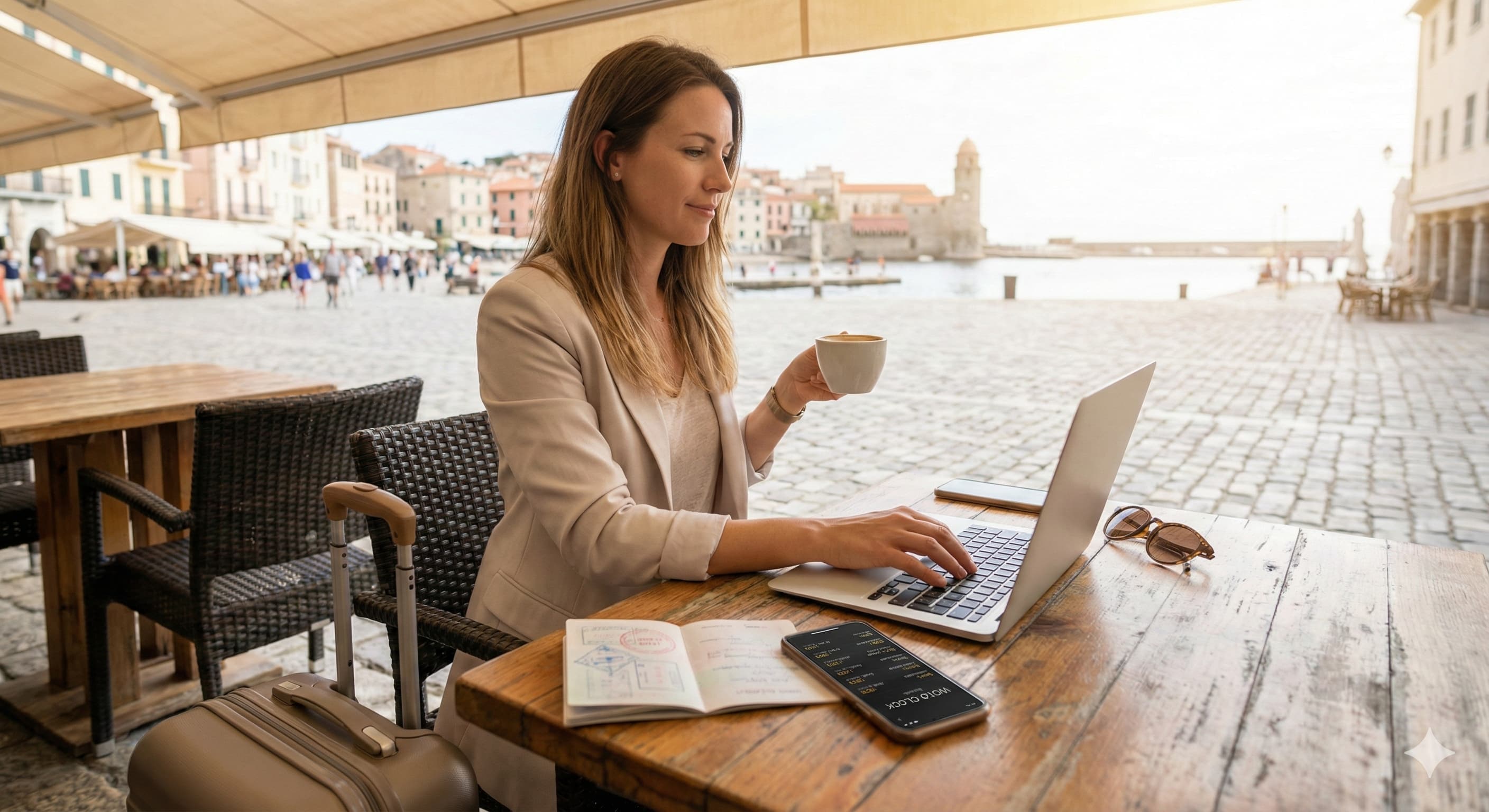
So, you're thinking about working from another country? It's a setup where you can keep your job but do it while living abroad, all thanks to some incredible digital tools and thankfully, more flexible work policies. This lifestyle means you can keep your career moving forward while diving headfirst into a new culture. Of course, it's not as simple as just packing a bag; you'll need to sort out things like visas, tax planning, and international health insurance to make sure you're doing it all legally and safely.
Why The Global Office Is The New Normal
The dream of swapping a dreary cubicle for a sun-drenched beachfront cafe isn't just some far-off fantasy anymore—it's a full-blown global movement. Working remotely from another country has gone from a niche lifestyle for a handful of freelancers to a real, viable career path for millions. This isn't just a passing trend; it's a fundamental shift in how we think about the workplace.
The explosion in remote work has kicked the door wide open, turning "digital nomads" into a massive demographic. Projections show that by 2025, a staggering 36.2 million Americans—that's about 22% of the workforce—are expected to be working remotely.
It's a worldwide phenomenon, too. Right now, 27% of remote-capable employees are fully remote, and another 52% have hybrid setups. This flexibility is what empowers so many people to pack their bags and live abroad without having to quit their jobs.
The New Rules of Work
This shift is about more than just changing your scenery; it's about completely rewriting the rulebook for your professional life. The modern professional is now juggling time zones instead of traffic and navigating international compliance instead of petty office politics. To make this work, you have to build a solid foundation.
I've seen people succeed and fail at this, and it almost always comes down to getting these three pillars right from the start:
- Legal Status: Getting the right visa is absolutely non-negotiable. Don't even think about trying to work on a tourist visa—it's rarely legal and can land you in serious trouble.
- Financial Compliance: Sorting out taxes and payroll across different countries is a headache, but it's a necessary one. A little planning upfront will save you from major legal and financial shocks later on.
- Personal Well-being: Never underestimate the importance of good international health insurance and a solid support system. Staying healthy and mentally resilient is the key to thriving, not just surviving, abroad.
This guide is your no-fluff roadmap to navigating this new world of work. We're going to break down every critical piece of the puzzle, giving you actionable steps and real-world advice to help you build a successful and sustainable life while working from anywhere.
Planning Your Move Abroad
Making the leap successfully is all about careful, deliberate planning. From picking the right spot to setting up your new daily life, every single detail matters.
A great starting point, if you're just dipping your toes in, is to check out some of the best cities for digital nomads. It can give you some much-needed inspiration and practical ideas about what makes a city great for remote work. This guide will walk you through the entire process, making sure you're ready for the incredible journey ahead.
To give you a bird's-eye view of what's coming, here's a quick look at the major planning areas we'll be covering.
Your Pre-Departure Master Checklist at a Glance
| Planning Area | Key Objective | Timeline |
|---|---|---|
| Visas & Permits | Secure the legal right to live and work in your chosen country. | 6-12 months before departure |
| Employer & Contract | Get official approval and amend your contract for remote work. | 4-6 months before departure |
| Payroll & Taxes | Understand and plan for tax obligations in both countries. | 3-6 months before departure |
| Health & Insurance | Arrange comprehensive international health coverage. | 2-3 months before departure |
| Banking & Finance | Set up international banking and payment solutions. | 1-2 months before departure |
| IT & Security | Ensure you have a secure and reliable tech setup. | 1 month before departure |
| Local Logistics | Book initial housing, get a local SIM, and handle registration. | 2-4 weeks before departure |
Think of this table as your high-level roadmap. We'll dive deep into each of these areas, so you'll know exactly what to do and when.
Securing Your Legal Right To Work Abroad
Packing your laptop is the easy part. The real work—the stuff that actually makes this dream possible—is navigating the often confusing world of visas and work permits. This is the one step you absolutely cannot afford to get wrong.
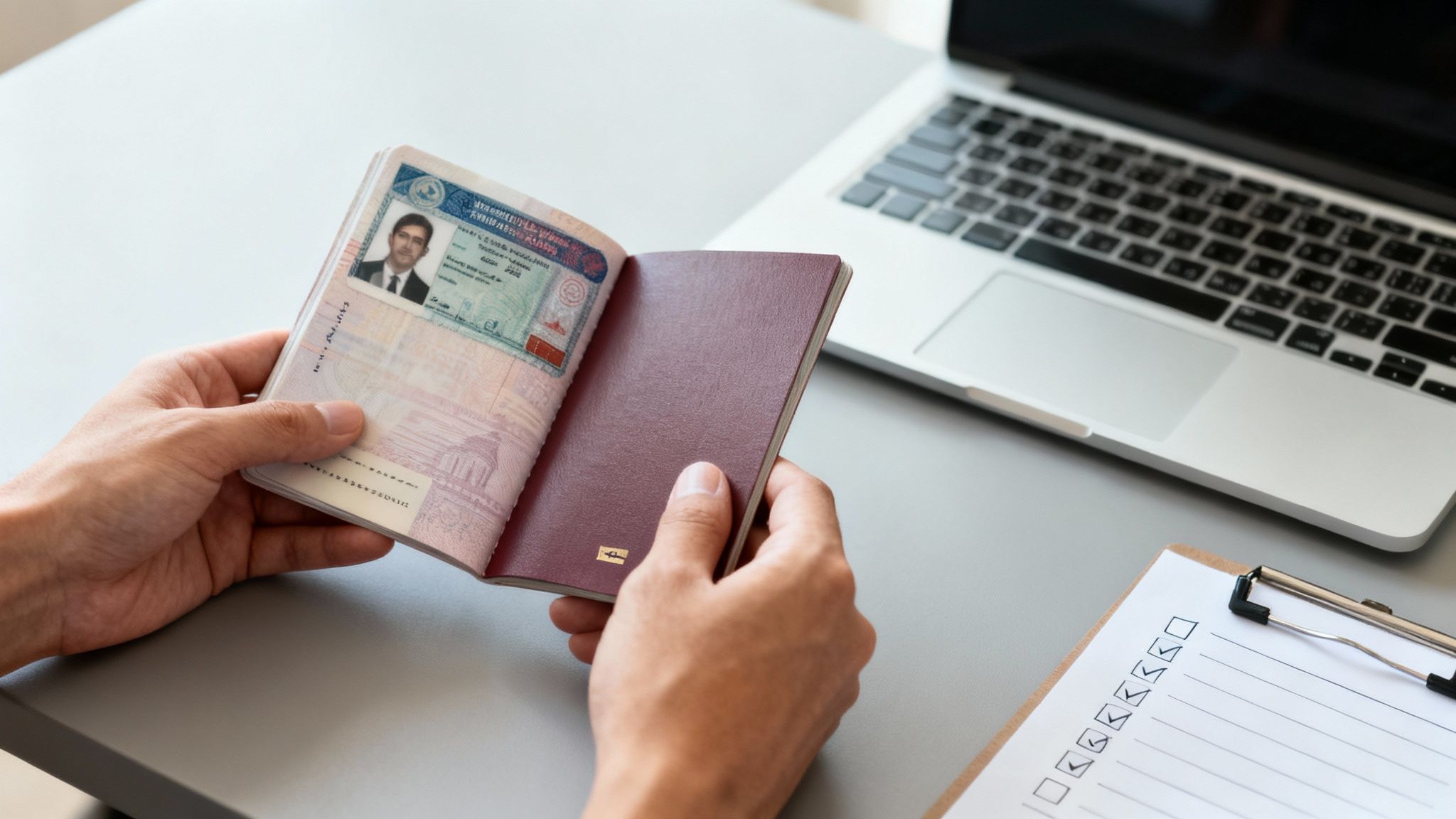
The biggest mistake I see aspiring remote workers make is assuming they can just show up and work "under the radar" on a tourist visa. Let me be clear: in almost every country, this is illegal. A tourist visa is for tourism, plain and simple.
Engaging in any work, even for your company back home, can lead to some pretty harsh consequences, including hefty fines, deportation, and even a ban on re-entry. Immigration officials know what to look for. If you land with a one-way ticket and your full office setup in your suitcase, you're raising a massive red flag.
The Rise of the Digital Nomad Visa
Luckily, governments are finally catching up to the remote work movement. As of today, more than 50 countries offer specific "digital nomad visas" or similar long-stay permits built for people just like us. These visas are a total game-changer, creating a clear, legal path to live and work in a new country.
But they aren't a golden ticket. Each country has its own unique set of requirements you'll have to meet.
Typically, you'll need to provide:
- Proof of remote work: This is usually a letter from your employer or a few client contracts.
- A minimum income: You'll have to prove you earn above a certain monthly or annual threshold.
- Comprehensive health insurance: Proof of a solid international health insurance policy is almost always non-negotiable.
- A clean criminal record: Expect to get a background check from your home country.
Don't just treat the visa requirements like a simple to-do list. Every document you submit tells a story about your stability and your intentions. A well-organized, thorough application shows you're a responsible person who won't become a burden on the host country.
Real-World Visa Scenarios
Let's look at how this plays out in a couple of popular spots. The details really matter, and they can be wildly different from one place to the next.
Take Portugal's D7 Visa, a favorite among remote workers. To qualify, you need to show a passive income equivalent to Portugal's minimum wage—€870 per month as of 2025 (this figure is tied to the minimum wage and adjusts annually). You'll also need to open a Portuguese bank account and have proof of accommodation lined up.
Now, compare that with Mexico's Temporary Resident Visa. This requires proving "economic solvency," which means showing a monthly income of approximately $4,100 USD for the last six months or a bank account balance of around $70,000 USD. Note that these figures vary by consulate and exchange rates, so always verify with your specific consulate before applying. Critically, you have to start this application process at a Mexican consulate before you enter Mexico.
If you're planning a more permanent move, a good guide to moving abroad and managing your finances can be invaluable for sorting through the bigger picture, from tax residency to handling your money across borders.
Getting Your Documents in Order
No matter where you're headed, your application is only as good as your paperwork. Start gathering these documents way ahead of time—some of them can take weeks, if not months, to get.
Your Core Document Checklist
| Document | Key Consideration | Pro Tip |
|---|---|---|
| Passport | Must be valid for at least 6-12 months beyond your planned stay. | Flip through and check for blank pages; many consulates require at least two. |
| Proof of Income | Bank statements, pay stubs, tax returns, or client contracts. | Provide at least 6-12 months of records to paint a picture of stability. |
| Health Insurance | Your policy must be valid in your destination for the entire visa duration. | Get a confirmation letter from your insurer specifically for the visa application. |
| Criminal Record Check | Required from your home country and any country you've lived in for 6-12+ months. | This process can be painfully slow. Start it first. |
| Proof of Accommodation | A lease agreement or a confirmed long-term booking. | Some countries will accept a formal letter of invitation from a resident. |
Securing your legal status is the foundation of a successful, stress-free adventure. It takes patience and a sharp eye for detail, but getting it right means you can finally focus on what you went there for: building an incredible life in your new global office.
Getting Your Company On Board
So, you've got this dream of working from a sun-drenched balcony in another country. It's an incredible thought, but it often comes down to one pivotal conversation: the one with your boss. Turning this idea into reality isn't just about asking for permission. It's about building a rock-solid business case that shows this is a win for the company, not just a personal adventure for you.
Before you even think about putting a meeting on the calendar, you need to do your homework. Get a feel for your company's current stance on remote work. Is there a formal, documented policy, or is it more of a quiet, case-by-case thing? This little bit of digging will tell you if you're asking for a small tweak or a major shift in how they operate.
The real secret here is to get inside your manager's head. Anticipate their concerns—productivity, security, communication—and walk into that meeting with practical, well-thought-out answers. You want to frame this whole thing around mutual benefit, showing that your commitment and output won't just stay the same, but could actually get even better.
Building Your Business Case
When it's time to talk, lead with what's in it for them. Don't open with your travel plans; start by explaining how this arrangement will make you a more focused, effective, and valuable part of the team.
Think of your proposal as a preemptive strike against any anxieties your employer might have. Draft a clear, straightforward document that maps out your entire plan and tackles the big questions head-on.
- Productivity and Availability: Promise them your output will be as solid as ever. Lay out a clear schedule showing your working hours, making sure to highlight the significant overlap with your home office's core hours for all those crucial meetings and team collaborations.
- Data Security: Show them you're taking security seriously. Mention your plan to use a VPN, stick to secure Wi-Fi, and follow every existing IT protocol to the letter. Protecting company data is non-negotiable.
- Communication Strategy: Detail exactly how you'll stay in the loop. Propose daily check-ins, a regular cadence of video calls, and make it clear you'll be hyper-responsive on platforms like Slack or Microsoft Teams.
For many companies, giving the green light means they need to have clear rules in place. Pointing them toward a resource on implementing effective remote work policies shows you're not just thinking about yourself, but also helping them build a framework for the future.
When you present a professional, well-researched proposal, you've already won half the battle. It shifts the conversation from a simple "Can I do this?" to "Here's a plan for how we can make this work for everyone."
Exploring Different Employment Arrangements
Sometimes, a company is intrigued by the idea but gets spooked by the legal and tax side of things. This is where you can really shine by coming prepared with a few alternative solutions. It shows you're serious and makes it much easier for them to say yes.
A common path is to shift from being a full-time employee to an independent contractor. This move puts the responsibility for taxes and legal compliance squarely on your shoulders, which simplifies things immensely for your employer. The trade-off, of course, is that you'll likely lose access to benefits like health insurance and retirement plans, so you have to run the numbers and see if it makes sense for you.
Another option that's gaining a lot of traction is using an Employer of Record (EOR). Think of an EOR as a third-party company that legally employs you in your new country on behalf of your current employer. They handle all the messy local stuff—payroll, taxes, and compliance—so your company can keep you on the team without the headache of setting up a legal entity abroad.
Comparing Your Options
| Arrangement | Who Handles Compliance? | Impact on Benefits | Best For |
|---|---|---|---|
| Direct Employee | The company (complex) | Benefits usually retained | Short-term stays or large companies with a global presence. |
| Contractor | You | Benefits are typically lost | Freelancers or those seeking maximum flexibility. |
| Employer of Record | The EOR service | Can often provide local benefits | Long-term stays where the company wants to retain you as an employee without the legal headache. |
By walking in with these kinds of practical, well-researched solutions, you're showing incredible foresight. You're not just bringing them a problem; you're bringing them a plan. Your goal is to make "yes" the easiest, most logical answer they can give.
Managing Your Money Across Borders
Don't let financial surprises derail your dream of working from another country. Moving your life abroad involves more than just packing a suitcase—it means you have to completely rethink how you handle your money. The questions can feel overwhelming at first, but with a solid plan, you can navigate your finances with confidence.
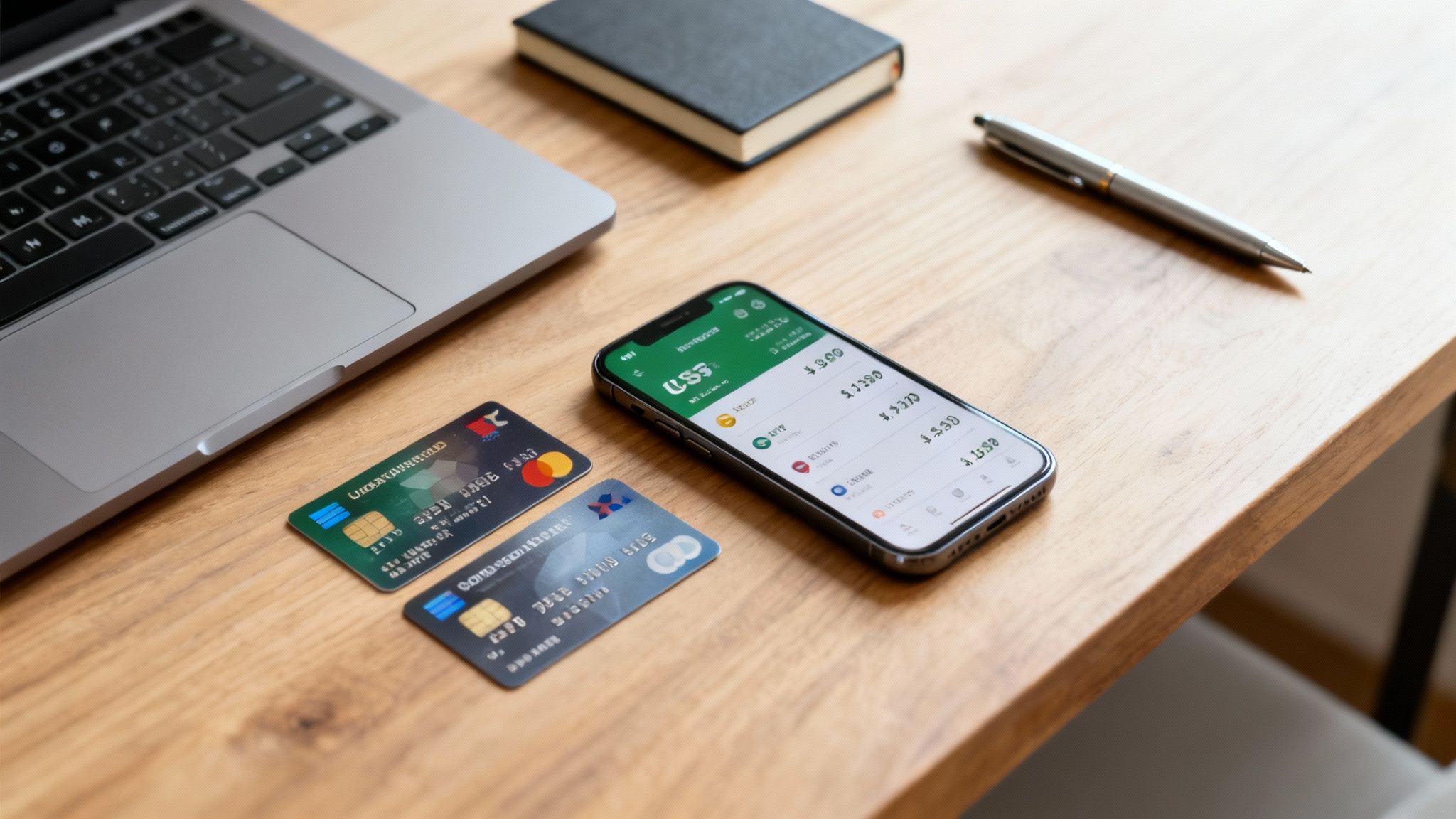
The first and biggest hurdle is figuring out your tax obligations. This isn't a detail you can put off until later; it's a critical piece of the puzzle that has serious legal and financial consequences. Getting this wrong can lead to hefty penalties and the nightmare scenario of paying taxes on the same income in two different countries.
Navigating The World Of Expat Taxes
The moment you start working remotely from a new country, your tax situation gets complicated. The most important concept you need to wrap your head around is tax residency. This status determines which country gets the primary right to tax your income.
Most countries rely on a "183-day rule." If you spend more than 183 days (roughly six months) in a country during its tax year, you're usually considered a tax resident. This means you're on the hook for local income taxes on the money you earn while living there, even if your employer is thousands of miles away.
For U.S. citizens, things are even more unique. The United States taxes its citizens on their worldwide income, no matter where they live. This immediately creates the potential for double taxation, but thankfully, there are ways to avoid it.
The most powerful tool for eligible Americans living abroad is the Foreign Earned Income Exclusion (FEIE). This allows you to exclude a significant portion of your foreign-earned income from U.S. taxes—up to $120,000 for the 2023 tax year. It's a game-changer, but you have to qualify.
You'll need to meet specific tests related to your time spent outside the U.S. It's well worth your time to learn more about how the Foreign Earned Income Exclusion works to see if it's the right move for you. Honestly, consulting with a tax advisor who specializes in expat issues is one of the smartest investments you can make.
Getting Paid Without Losing Money
Once you have a tax strategy, the next big question is how to actually get paid. If your employer is paying you in your home currency, you need an efficient and cheap way to convert it and use it locally.
Just relying on your home bank account is a classic—and costly—rookie mistake. International wire transfers often come with ridiculously high fees and terrible exchange rates, slowly eating away at your paycheck. For example, a typical bank might hit you with a $25-$50 flat fee per transfer, on top of a currency conversion markup of 3-5%. That adds up fast.
This is where modern fintech solutions come to the rescue. Services built for people living global lives offer a much better deal.
- Multi-currency accounts: Platforms like Wise (which used to be TransferWire) or Revolut let you hold money in dozens of currencies. You can get your salary paid in USD, for example, and then convert it to Euros whenever you want at a much lower cost.
- International-friendly debit cards: These services come with debit cards that let you spend money abroad with minimal or zero foreign transaction fees, making daily life way more affordable.
- Local bank details: Some of these platforms can even give you local account numbers in different countries. This means your employer can pay you like a local employee, which can make payroll a whole lot easier for them.
Local Bank Account Or Fintech Solution?
So, do you need to open a traditional bank account in your new country, or can you get by with a fintech app? The answer usually depends on your specific needs and how long you're staying.
Opening a local account can be non-negotiable for certain things, like signing a long-term apartment lease, setting up utility bills, or getting a local phone plan. But be warned: the process can be a bureaucratic headache, often requiring stacks of paperwork, proof of address, and your residence permit.
For many digital nomads, especially early on, a hybrid approach is the perfect solution. Use a multi-currency service like Wise for receiving your salary and for most of your day-to-day spending. At the same time, open a basic local bank account for those essential in-country transactions. This gives you the best of both worlds: the low cost and convenience of fintech, combined with the local access of a traditional bank.
Protecting Your Health While Abroad
One of the biggest, and frankly most dangerous, assumptions you can make when working abroad is that your health insurance from back home will cover you. Let's get this straight: it almost certainly won't.
Most domestic plans offer practically zero coverage once you're living in another country. Maybe they'll help with a life-or-death emergency on a two-week vacation, but relying on it for a months-long stay is a massive, costly gamble you don't want to take.
This is where the confusion often kicks in. People think, "No problem, I'll just grab some travel insurance." And while that's a smart move for a short holiday, it's completely wrong for anyone living and working abroad. Travel insurance is designed for trip cancellations, lost bags, and sudden medical crises—not for the reality of your day-to-day health in a new country.
The Critical Difference: Travel Insurance vs. International Health Insurance
Think of travel insurance as the first-aid kit in your suitcase. It's perfect for patching up an unexpected problem but useless for managing your actual health. It won't cover routine check-ups, ongoing treatments for pre-existing conditions, cancer care, or mental health support.
For anyone planning to be abroad for more than a few months, a dedicated international health insurance plan is non-negotiable. This is the real deal—comprehensive medical coverage built specifically for the lives of expats and digital nomads.
The difference is night and day. Here's a simple breakdown to see why you can't substitute one for the other:
Travel Insurance vs International Health Insurance
| Feature | Travel Insurance | International Health Insurance |
|---|---|---|
| Coverage Scope | Short-term emergencies, trip issues. | Comprehensive medical care, including routine visits. |
| Pre-existing Conditions | Almost never covered. | Often covered, subject to underwriting. |
| Routine Care | Not included (e.g., check-ups, dental). | Usually included as an option. |
| Medical Evacuation | Basic emergency transport. | Comprehensive evacuation to a suitable facility. |
| Duration | Capped at a specific trip length (e.g., 90 days). | Annual, renewable policies for long-term living. |
As you can see, choosing the right plan is crucial. You're not just ticking a box; you're investing in your well-being and peace of mind. You want a plan that gives you the freedom to choose your own doctors and hospitals, covers you for both ER visits and regular check-ups, and includes robust medical evacuation in case you need to be flown elsewhere for proper care.
Navigating Healthcare In A New Country
Once you've got the right insurance, the next hurdle is figuring out how to actually use the local healthcare system. It can feel pretty intimidating, especially if you don't speak the language.
The trick is to do your homework before you ever need a doctor.
Start by looking up highly-rated, English-speaking doctors and clinics in your new city. Your insurance provider will often have a searchable network directory. Beyond that, expat forums and local Facebook groups are goldmines for firsthand recommendations from people who have already been there. Knowing exactly where to go before you get sick removes a massive layer of stress.
Don't wait for a crisis to figure out your healthcare options. Build a small "medical directory" for yourself with the numbers for your preferred doctor, the nearest reputable hospital, and the 24/7 helpline for your insurance provider. Having this information at your fingertips is invaluable.
It's also a smart idea to learn some basic health-related phrases in the local language. Even just being able to describe your symptoms simply can make a world of difference in an urgent situation. A solid plan is the foundation, and you can learn more about what to look for in our guide to health insurance for digital nomads.
Prioritizing Your Mental Well-Being
Looking after your health abroad goes way beyond physical issues. The mental and emotional toll of moving to a new country is very real. You're dealing with loneliness, culture shock, and the stress of being thousands of miles from your usual support system.
Be proactive about building a new community. Find a local club for a hobby you enjoy, show up to expat meetups, or enroll in a language class. Forging those new connections is fundamental to making a new place feel like home.
Most importantly, make sure your international health plan includes solid mental health coverage. Having access to therapy or counseling, whether in-person or online, can be an absolute lifeline. Your mental health is every bit as critical as your physical health for building a successful and happy life abroad.
Setting Up Your Life And Workspace
Alright, you've navigated the big legal and financial stuff. Now for the fun part: turning that foreign address into a place that actually feels like home. This is where the dream starts to feel real, shifting from paperwork and planning to your day-to-day life abroad.

Getting this next phase right is all about the details. From finding a decent place to live to making sure your tech setup won't let you down mid-meeting, these practical steps are the foundation for a sane and successful remote work experience.
Finding Your New Home Base
First things first: you need a place to live. My advice? Book a short-term rental for your first month. This gives you a comfortable place to land and, more importantly, buys you time to check out different neighborhoods in person before you lock yourself into a long-term lease.
Once you start the hunt for a more permanent spot, keep your guard up. Rental markets in popular expat cities can be fierce, and unfortunately, they attract their fair share of scams.
- Never wire money for a deposit before you've seen the apartment with your own eyes and met the landlord or a legitimate agent. Seriously.
- Stick to local, reputable real estate sites. Ask other expats in Facebook groups or forums what platforms they trust. Generic international sites are often less reliable.
- Get a second pair of eyes on the lease. If it's in a language you don't fully understand, ask a local friend or colleague to look it over before you sign anything.
Your apartment isn't just a place to crash. It's your office, your retreat, and your home base for exploring a new country. Investing the time to find a safe, comfortable, and well-located place is one of the smartest moves you can make for your overall well-being.
Creating A Productive Remote Workspace
With keys in hand, your next mission is to build a functional workspace. Your productivity—and maybe even your job—depends on having the right tools and a solid setup. You can't just wing it.
The absolute bedrock of any remote work life is a fast and stable internet connection. Don't just take the landlord's word for it; run a speed test the minute you move in. If it's not cutting it for video calls and big file uploads, you need a Plan B.
This is where a local SIM card with a hefty data plan becomes your best friend. It's not just for finding your way around town; it's your professional lifeline when the Wi-Fi inevitably goes out.
And just as crucial is your digital security. A good Virtual Private Network (VPN) is non-negotiable, for a few very practical reasons:
- It Protects Company Data: A VPN encrypts your connection, which is vital for keeping sensitive work info safe, especially if you're tapping into the Wi-Fi at a local cafe.
- It Unlocks Geo-Restricted Content: Need to access a banking site or streaming service from back home that's blocked abroad? A VPN makes it possible.
- It Guards Your Privacy: It keeps your online activity hidden from prying eyes, adding a layer of security you'll be thankful for.
By sorting out your housing and your workspace methodically, you're building a stable foundation. This lets you finally stop stressing about logistics and start actually living—exploring your new city, meeting people, and turning this whole "working from another country" dream into a sustainable reality.
Got More Questions? We've Got Answers
Even with the best-laid plans, working remotely from another country brings up a lot of "what ifs." It's completely normal. We get these questions all the time from folks gearing up for their own international adventure, so let's tackle the big ones head-on.
Can I Get Away With Working Remotely On a Tourist Visa?
Let's be direct: in nearly every country, the answer is a hard no. A tourist visa is exactly what it sounds like—it's for tourism and leisure. Period.
If you're caught working, even for your company back home, you're breaking the law. The consequences aren't a slap on the wrist, either. You could be looking at hefty fines, immediate deportation, and even a ban from re-entering the country for years.
The right way to do this is to get the correct permit. Look into your destination's digital nomad visa or see if a long-stay visa allows for remote work.
Trying to work "under the radar" is a huge gamble with your professional life and travel freedom. It's just not worth the risk. Always, always sort out your legal paperwork before you log on for your first day of work abroad.
How in the World Do Taxes Work When I'm Living Abroad?
This is where things can get a bit tricky, but it boils down to two key things: your citizenship and your tax residency status.
Most countries have a "183-day rule." If you spend more than half the year (183 days) in a country, you're likely considered a tax resident and will owe them local income tax.
The plot thickens for citizens of certain countries, like the U.S., who are taxed on their worldwide income no matter where they live. This creates a very real risk of being taxed twice on the same earnings. The good news is that there are tax treaties and foreign income exclusions designed to prevent this. Your best move is to talk to a tax advisor who specializes in expat issues—they know the ins and outs and can save you a massive headache and a lot of money.
Is My Health Insurance From Back Home Good Enough?
Honestly, it's almost certainly not. Your standard domestic health insurance plan is built for your home country. At best, it might cover a true, life-or-death emergency for a few days while you're traveling, but that's about it. Relying on it for an extended stay abroad is a recipe for disaster.
You absolutely need a dedicated international health insurance policy. These plans are specifically designed for people living and working abroad. They provide real, comprehensive coverage for everything from a routine check-up to a serious medical emergency, giving you peace of mind that you're properly protected, wherever you are.
Figuring out international health coverage can feel overwhelming, but it doesn't have to be. The expert brokers at Expat Insurance are fantastic at this. They can help you sift through plans from over 65 different insurers to find the perfect fit for your new life abroad. You can get a free quote and personalized advice to get the ball rolling.
Justin Barsketis
Insurance Expert & Writer
Justin is an insurance guru that loves digital marketing. As our founder Justin manages our business development programs and MGA network. Please don’t hesitate to contact him if you are not getting the attention you deserve.
