

June 18, 2026
•
5 min read
Why Lithuania Has the World's Happiest Young People (And What It's Actually Like to Live There)
Lithuania has the happiest young people on Earth, 30km from a dictatorship. We explore why, and what it's like to live in Europe's most resilient country.
Justin Barsketis
Insurance Expert
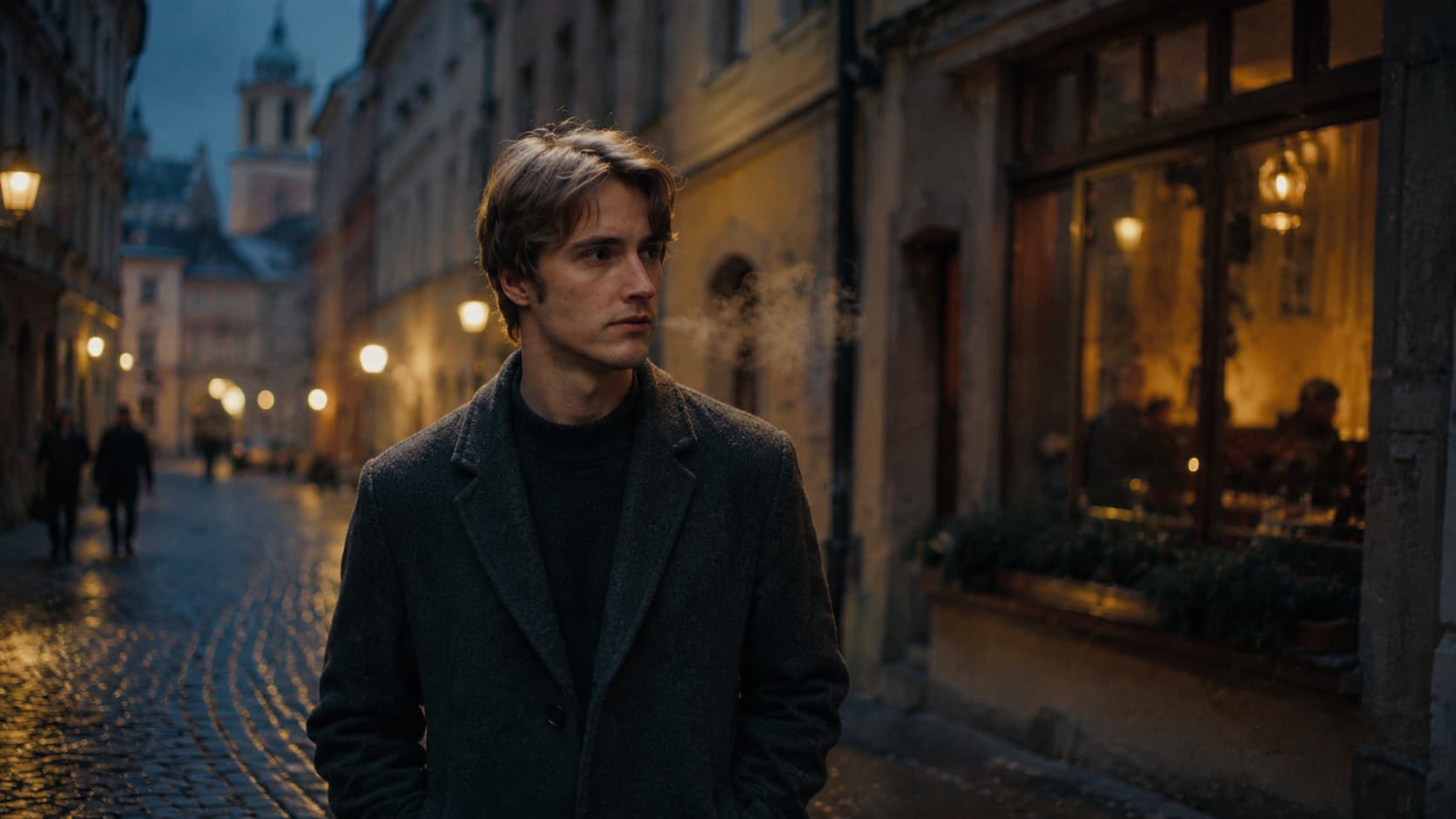
This country was wiped off the map three times, and it came back every single time. It sits about thirty kilometers from a dictatorship, with Russia’s Kaliningrad on one side and Belarus on the other. The winters are long and dark, and most people you pass on the street will not smile at you. And yet, according to the World Happiness Report, the young people who live here are the happiest on Earth. We went to Lithuania to find out how a country this close to danger stays this happy, and what its people might understand about freedom that the rest of us have forgotten.
Interested in expat health insurance? Click here for a 1-minute quote!
Throughout this article, anytime you see blue text, it is a link to more information, like this: click here. We encourage you to click through, because the more you understand about a place, the better prepared you are to live or travel there.
The Happiest Young People on Earth
Why Lithuania Is the Happiest Country for Young People
In its 2024 edition, the World Happiness Report ranked countries by generation for the first time, and Lithuania’s under-30 population took the number one spot on the planet. Young Lithuanians rated their own lives at 7.76 out of 10. For comparison, Americans in the same age group rated themselves 6.39, which placed the United States 62nd.
This was not a one-off. Lithuania has been climbing the overall happiness rankings steadily, from 52nd place back in 2017 to 16th in the most recent report. For a country of fewer than three million people that spent fifty years inside the Soviet Union, that is a remarkable arc.
What makes the number so striking is the contrast. Lithuania is not a sun-soaked, carefree place. It is cold, it is reserved, and it carries a heavy history. So the obvious question is the one we kept asking: why are these young people so happy?
A Country That Refuses to Die
Why Lithuania Is the Happiest Country for Young People
To understand the happiness, you have to understand the history, because the two are connected. We made a short documentary about it, and we have embedded it below.
Watch: "The Warmest Cold Country On Earth" by clicking the image above
Lithuania has been erased from the map more than once. Empires carved it apart piece by piece in the 1700s until the mapmakers simply stopped drawing it. When the country lost its borders, it held onto its language instead, smuggling banned Lithuanian books across the frontier under floorboards and in sacks for forty years. It declared independence again in 1918, lived as a normal European country for twenty-two years, and was then swallowed by the Soviet Union in 1940. More than a hundred thousand Lithuanians were deported east, each family given about twenty minutes to pack a suitcase.
Then, in the late 1980s, the country started to sing. A quarter of a million people gathered in a Vilnius park to sing songs that had been illegal a year earlier. Two million people across the three Baltic states joined hands in a human chain so long it could be seen from space. When Soviet tanks rolled into Vilnius in January 1991, thousands of unarmed civilians stood in front of them holding candles. Fourteen people died, but the country held, and it became free.
The Lithuanians we spoke to do not treat this as ancient history. Vilma, who works in logistics, put it simply when we asked why her country is happy: "We are here, and we are happy, and we appreciate the country. We worship what we have. We worship freedom." A young filmmaker we interviewed told us, "I’m happy right now, even if I don’t smile." That sentence, more than any statistic, is the heart of this place.
Cold on the Outside, Warm on the Inside
Why Lithuania Is the Happiest Country for Young People
Almost every foreigner we met used the same word to describe Lithuanians at first: cold. Then, without fail, they corrected themselves. The word they meant was reserved.
Lithuanians do not perform warmth they have not yet decided you have earned. They will not make small talk at a bus stop or smile at a stranger. But once you are inside the circle, the friendship is unusually deep and durable. Bridget, an American designer who moved from Chicago and ended up marrying a Lithuanian, told us that people here "feel more genuine, feel more patient," and that beneath the famous coldness is "a sense of kindness, a sense of community" she never found back home.
Glenn, a music producer from London, gave us the line that became the theme of the whole project. When he first arrived, he was offended that nobody held doors or said hello. Over time he realized that was the wrong way to read it. "They recognize the luxury of being offended," he said. A neighbor who does not greet you is not being rude. They are minding their own business and protecting their own small circle, and after a thousand years of having that circle threatened from the outside, who could blame them.
That reframe is worth sitting with, because it gets at something Lithuanians seem to understand that many of us in wealthier, safer countries do not. To be offended by a missing pleasantry is a luxury. Freedom is not a luxury. Freedom is a right, and these people spent a thousand years learning the difference.
So Why Are They So Happy?
Why Lithuania Is the Happiest Country for Young People
The happiness is not a mystery once you look at what the country actually offers a young person. A few threads come up again and again.
Opportunity without crushing cost. University is free for Lithuanians, so young people start their careers without the debt that weighs down their American peers. Rents, while rising, are still a fraction of Western European or US prices. The economy has grown quickly, and the tech sector in particular is booming. Lithuania’s startup ecosystem is now worth more than 16 billion euros and has produced five "unicorn" companies, including the secondhand fashion giant Vinted and the cybersecurity firm behind NordVPN. A talented young person can build a real career here without leaving home.
A genuine work-life balance. According to the OECD, only about 1 percent of Lithuania’s workforce works very long hours, one of the lowest figures anywhere. People finish work and go to the gym, walk by the river, or meet friends at a bar where an accordion player might be tearing through old folk songs.
Strong family ties. Family networks remain close, and many young people stay near their parents and grandparents. One Lithuanian psychologist described this safety net as a kind of insurance: young people know that if things go wrong, they can rely on family.
Safety. Lithuania is one of the safest countries in the European Union for everyday life. Recent EU statistics put it as the second-lowest in the entire bloc for residents reporting crime, violence, or vandalism in their area, with only about 2.7 percent reporting any such incident against an EU average near 10 percent. A stolen cell phone is genuinely newsworthy here.
Perspective. This is the one researchers keep returning to. Young Lithuanians grew up hearing what their parents and grandparents survived under Soviet rule, and they live next to countries with far less freedom. That comparison, far from dragging them down, seems to sharpen their gratitude. They know exactly what they have, because they know what it cost.
The Shadow Across the Border
Why Lithuania Is the Happiest Country for Young People
We would be painting a dishonest picture if we stopped there, and Lithuanians themselves are the first to insist on honesty.
The happiness statistic has a shadow. The same country with the happiest young people also has one of the highest suicide rates in the European Union and high rates of alcoholism, and its over-60s rank near 44th for their age group rather than first. Happiness here is not uniform, and it is not naive. As one young musician told us bluntly, the country is both very happy and quietly struggling at the same time. If you or someone you know is dealing with these issues, it is worth reaching out to a professional or a trusted person for support.
Then there is the border. Lithuania shares roughly 680 kilometers of frontier with Belarus and another 250 with Russia’s heavily militarized Kaliningrad exclave. Since Russia’s full-scale invasion of Ukraine in 2022, the country has been on alert. Households receive government guidance on what to do in the event of an invasion. The Baltic states are building a fortified defensive line along their eastern borders, and Lithuania is hosting allied troops as part of its NATO commitments.
And still, people stay. Vilma told us she has a plan A and a plan B, that her family considered moving when the war in Ukraine started, and that they decided to stay because there is nowhere they would rather be. "My ancestors didn’t flee this country for me to lie down," one American with Lithuanian heritage told us. They live with the danger, and they choose joy anyway. That choice, made every single morning, may be the real engine of the happiness.
Could You Be Happy in Lithuania?
Why Lithuania Is the Happiest Country for Young People
A growing number of people are asking exactly that. With record numbers of Americans looking to live abroad, Lithuania has quietly become one of Europe’s most interesting options, and not only for those with Baltic roots.
It tends to suit a particular kind of person: someone who wants to slow down and notice the small details, who does not need a place to perform friendliness, and who values safety, nature, and a low cost of living over nonstop spectacle. If that sounds like you, we wrote a companion piece that covers the practical side of relocating, including visas, the healthcare system, neighborhoods, and budgets. You can read our full guide to moving to Lithuania next.
One practical note worth flagging early, since it surprises people: if you move to Lithuania but do not work for a local employer, you generally will not be covered by the public health system and will need private health insurance for living abroad. It is one of the first things we help expats sort out, and it is far easier to handle before you go than after.
Frequently Asked Questions
Why Lithuania Is the Happiest Country for Young People
Is Lithuania really the happiest country in the world? Not overall. Finland holds the top overall spot. But in the World Happiness Report’s ranking by age, Lithuania’s under-30 population ranked first in the world, with young Lithuanians rating their lives at 7.76 out of 10.
Why are young Lithuanians so happy? Researchers point to a fast-growing economy, free university education, affordable living, strong family ties, real work-life balance, and high day-to-day safety. Many also credit perspective: young people compare their lives to the Soviet hardship their parents endured and to less-free neighbors, which deepens their gratitude.
Is Lithuania safe to live in? For everyday crime, very much so. It is among the safest countries in the EU. The bigger question for many is geopolitical, given its border with Russia and Belarus, but Lithuania is a NATO and EU member and invests heavily in its defense.
Can Americans move to Lithuania? Yes. There is no specific digital nomad visa, but Americans can pursue work-based residence permits, a startup visa, or other routes. Those with Lithuanian ancestry may also have a path to citizenship by descent. Our moving guide covers the details.
Do I need health insurance to live in Lithuania? Almost always, yes. Non-EU residents must show proof of health coverage when applying for a visa or residence permit, and anyone not contributing to the public system through local employment needs a private plan.
Final Thoughts
Why Lithuania Is the Happiest Country for Young People
Lithuania does not announce its happiness. It does not smile at you on the street or sell itself to you. It is a country that was erased three times and came back three times, that smuggled its own alphabet to survive, and that now raises the happiest young people on Earth on the doorstep of the very power that once erased it. The lesson it offers is quiet but hard to forget: freedom is worth more when you have had to fight for it, and joy is a choice you make in spite of the cold and the shadow at the border, not because they are absent.
If Lithuania has caught your attention, the most useful next step is to get your coverage in order. We work with expats moving all over the world, and one of our brokers, Aldis, is a Lithuanian-American who repatriated to Lithuania himself, so this is a place we know firsthand.
Ready to take the next step? Get a free insurance quote, or talk to a broker on the phone to discuss your specific situation.
Justin Barsketis
Insurance Expert & Writer
Justin is an insurance guru that loves digital marketing. As our founder Justin manages our business development programs and MGA network. Please don’t hesitate to contact him if you are not getting the attention you deserve.
